
What Probate Covers in Copiah County
Probate is the court process for settling what a person leaves behind. It covers wills, estates, and the legal handling of property and debts after a death. In Copiah County, probate also reaches the living. The same court appoints guardians for minors and conservators for adults who can no longer manage their own affairs. Estate matters fall into two broad groups. A testate estate is one where the person left a valid will. An intestate estate is one where no will exists, so state law decides who inherits. Both kinds create Copiah County probate records that the public can often view.
All of this work belongs to the Chancery Court, which serves as the probate court for the county. The Chancellor hears estate cases, will contests, guardianships, conservatorships, and matters that involve minors. The Chancery Clerk keeps the files, records the wills, and issues certified copies. Land tied to an estate is handled on the chancery side too, since the clerk records deeds and guards the title history. Because of this split, most people who want Copiah County probate records begin with the Chancery Clerk rather than the trial bench.
The county describes the role of its Chancery Court on its official courts page.
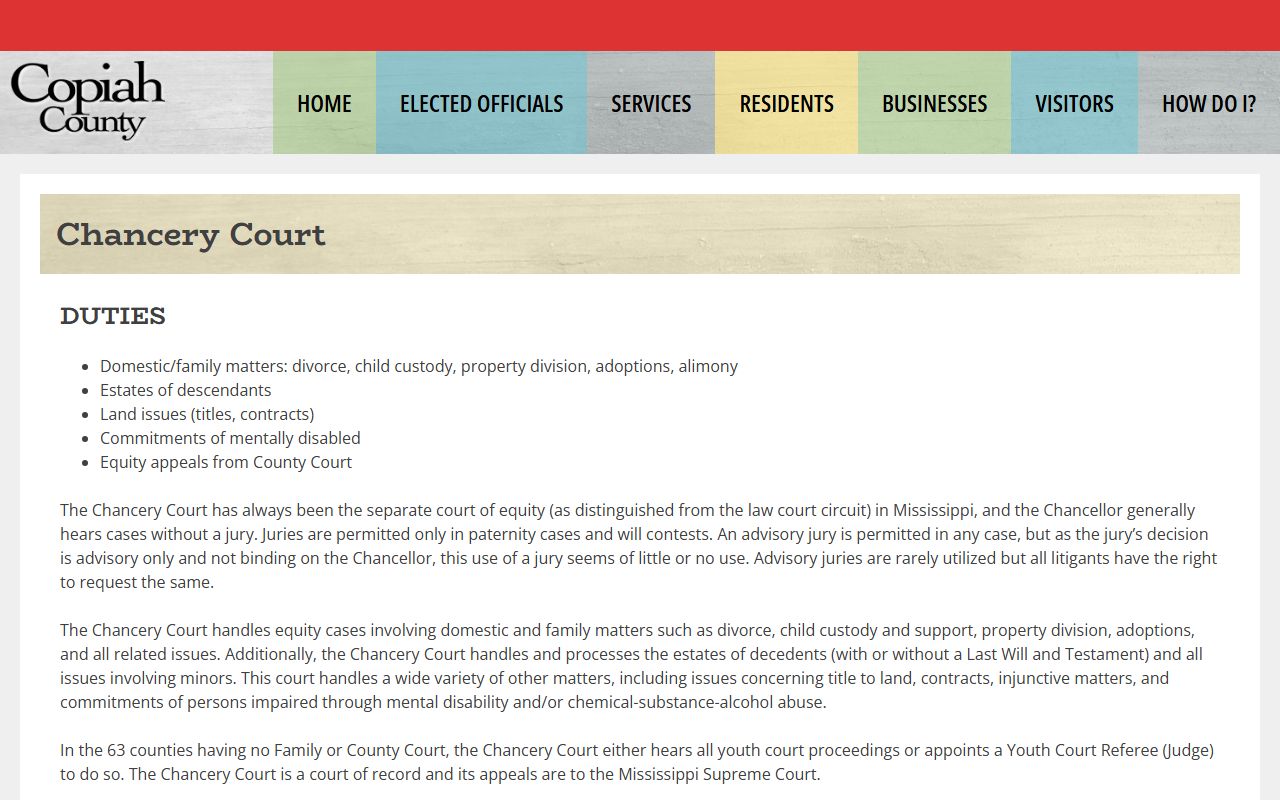
That page confirms the court handles estates of decedents, with or without a last will, and all issues that involve minors. It is the clearest official signal that probate lives in chancery here.
Probate Terms Defined
A handful of words come up again and again in estate filings. Knowing them makes a Copiah County probate records search far easier to read. The list below covers the terms you will meet most often when you open a file or talk with the clerk.
- Testator
- The person who made a will. A testator sets out who should receive their property and who should manage the estate.
- Executor
- The person named in a will to carry out its terms, gather assets, pay debts, and distribute what is left.
- Intestate
- Dying without a valid will. State succession law then decides who inherits and who administers the estate.
- Guardianship
- A court arrangement that places a minor, or that minor's estate, under the care of an appointed adult.
- Conservatorship
- A court arrangement that lets an appointed person manage the finances or affairs of an adult who cannot do so.
How Probate Works in Copiah County
Every estate moves through a set order of steps. The path depends on whether a will exists and how large or complex the estate turns out to be. Small or simple estates may close fast, while contested ones can run much longer. The steps below show the usual route a Copiah County probate case follows from start to finish.
- Find out whether the decedent left a will and whether the estate needs formal court administration.
- Contact the Chancery Clerk to search for a will or any prior filing under the person's name.
- File the proper petition or application in Chancery Court, with an attorney when the law or good sense calls for one.
- Let the Chancellor hear the case. Juries are rare in chancery and appear mainly in will contests and paternity matters.
- After appointment, the estate representative handles notices, inventory, creditor claims, accountings, property, and distribution under court supervision.
- Request certified copies of probate orders or letters from the Chancery Clerk once the court has signed them.
How to Search Copiah County Probate Records
There is more than one way to reach Copiah County probate records, and the right channel depends on the age of the file. The county links an official Chancery Clerk portal, and the office states that all county land records and wills are online. During review, that portal did not show a readable search form, so the exact fields are not known. Plan to search by the name of the decedent or estate, and ask the clerk how to look up older books and pages. Newer chancery cases may also sit in the statewide electronic court system.
Use the channel that fits your record. Each one below leads to a real point of access for Copiah County probate records.
- The official Chancery Clerk online portal for land records and wills.
- Mississippi Electronic Courts, with public access registration through PAMEC, where sensitive case types may be limited.
- In person at the Chancery Clerk's office on South Lowe Street in Hazlehurst.
- By phone, mail, or email to the Chancery Clerk for copies and file searches.
- In-house genealogy searches for older estate and will records, which the office offers from county formation in 1823 to the present.
For divorce, custody, and other family files that also sit in chancery, see the county marriage and divorce records page. The same office often holds both kinds of records.
The Chancery Court and Chancery Clerk in Copiah County
Probate in this county runs through two linked offices. The Chancery Court is where a Chancellor decides estate, guardianship, and conservatorship cases. The Chancery Clerk is the record keeper who files the papers, records wills, and hands out certified copies. Estate petitions are filed and heard through the clerk's office, so that is the first stop for most searches. The clerk also serves as the county's treasurer and records the minutes of the Board of Supervisors, but estate work stays its core court duty. The contact cards below give the working details for each.
Copiah County Chancery Court
Copiah County Courthouse
100 Caldwell Drive
Hazlehurst, MS 39083
Copiah County Chancery Clerk
Deborah Sandifer, Chancery Clerk
122 S. Lowe Street, P.O. Box 507
Hazlehurst, MS 39083
(601) 894-3021
Deputy clerks Kimberly Hemphill and Kristina Williams also assist the public with files and copies. The office is part of the Mississippi Electronic Court System and serves as the county's official record keeper. For deeds, liens, and other recorded documents tied to an estate, the same Chancery Clerk office holds the title history.
Copiah County Probate Filing Fees
Fees apply when you file an estate case or ask for certified copies. Copiah County does not publish a probate fee schedule in its official online sources, so the figures below are shown honestly rather than guessed. Call or visit the Chancery Clerk to confirm the current cost before you file or order a copy. Electronic access through the state court system carries its own registration and per-page charges.
| Item | Amount |
|---|---|
| Probate filing fee | Not published, ask the Chancery Clerk |
| Certified copy of probate order or letters | Not published, ask the Chancery Clerk |
| Will search or genealogy search | Not published, ask the Chancery Clerk |
| Guardianship or conservatorship application | Not published, ask the Chancery Clerk |
| MEC / PAMEC document view | Registration and per-page fees may apply; confirm the current rate |
Note: published fees can change, so confirm the exact amount with the Chancery Clerk before you mail a payment or place an order.
What Copiah County Probate Records Show
A probate file builds up as the case moves along. It can start with a will and grow into a full record of how an estate was settled. The same is true for guardianship and conservatorship files, which track the care of a person and their assets over time. The items below appear most often in Copiah County probate records.
- Wills filed for probate, along with testate and intestate estate papers.
- Petitions for letters testamentary or letters of administration.
- Guardianship, conservatorship, and minor's estate matters.
- Inventories, accountings, creditor notices, and claims against the estate.
- Final decrees, distribution orders, and land-title issues tied to an estate.
Will contests can also enter the file, and these are among the few chancery matters where a jury may sit. The clerk keeps every signed order, so a complete file shows both what was asked and what the court decided. For older estates, the same papers double as a family history source, since they name heirs, spouses, and the property each one received.
Restricted Copiah County Probate Records
Not every chancery file is open. State law shields several categories tied to children, health, and privacy. A search of Copiah County probate records will not reach these without authority or a court order. Adoption proceedings are confidential, even though the clerk lists them among its records. Mental health and drug or alcohol commitment cases are sensitive and should be treated as closed unless the clerk confirms otherwise. Records that name minors are often sealed or redacted, and personal identifiers such as Social Security and account numbers may be removed.
Some chancery files are kept private by law from the start. The county's Youth Court page explains how matters that involve children are handled.
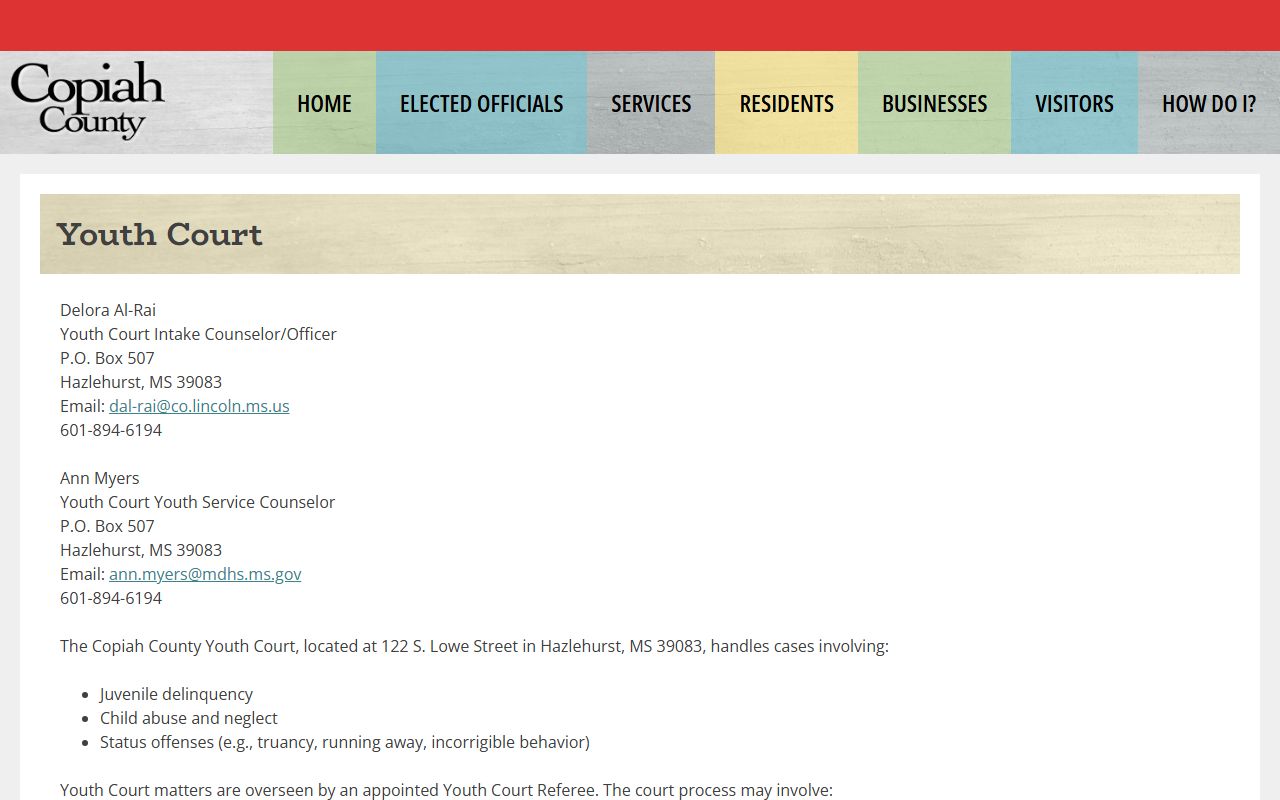
Youth Court records covering delinquency, abuse, and neglect stay confidential and are not part of an open probate search. Mississippi keeps these files closed under statute, and the court may seal or unseal them only by order. If a record is restricted, ask the Chancery Clerk what proof or authority you need before you go further.
Note: public access to court records flows from Mississippi law, and sealed or sensitive files stay closed even when most probate records remain open.