
How to Search Copiah County Court Records
No single free county portal pulls every Copiah court into one search. The practical access map routes by court level instead. Felony and larger civil cases run through the Circuit Court. Divorce, probate, guardianship, land, and will matters run through the Chancery Court. Traffic tickets, misdemeanors, evictions, and small civil claims sit in Justice Court. City citations stay with the issuing municipality, such as Hazlehurst or Crystal Springs. For Circuit and Chancery cases filed electronically, the statewide Mississippi Electronic Courts system and its public side, PAMEC, hold the digital docket. Statewide systems fill the gaps, with vital records handled by the health department and custody status tracked through state corrections and VINELink.
Start by gathering what the portal or clerk will ask for. A case number speeds any search. If you do not have one, a full party name, an approximate filing date, and the case type help narrow results. Remote viewing of Circuit and Chancery documents runs through Mississippi Electronic Courts, and public access there requires a registered account and per-page fees. Sealed and sensitive cases will not appear in remote results at all.
The Mississippi Electronic Courts access page explains how the statewide e-filing and case management system serves the trial courts, as shown on the official MEC information page.
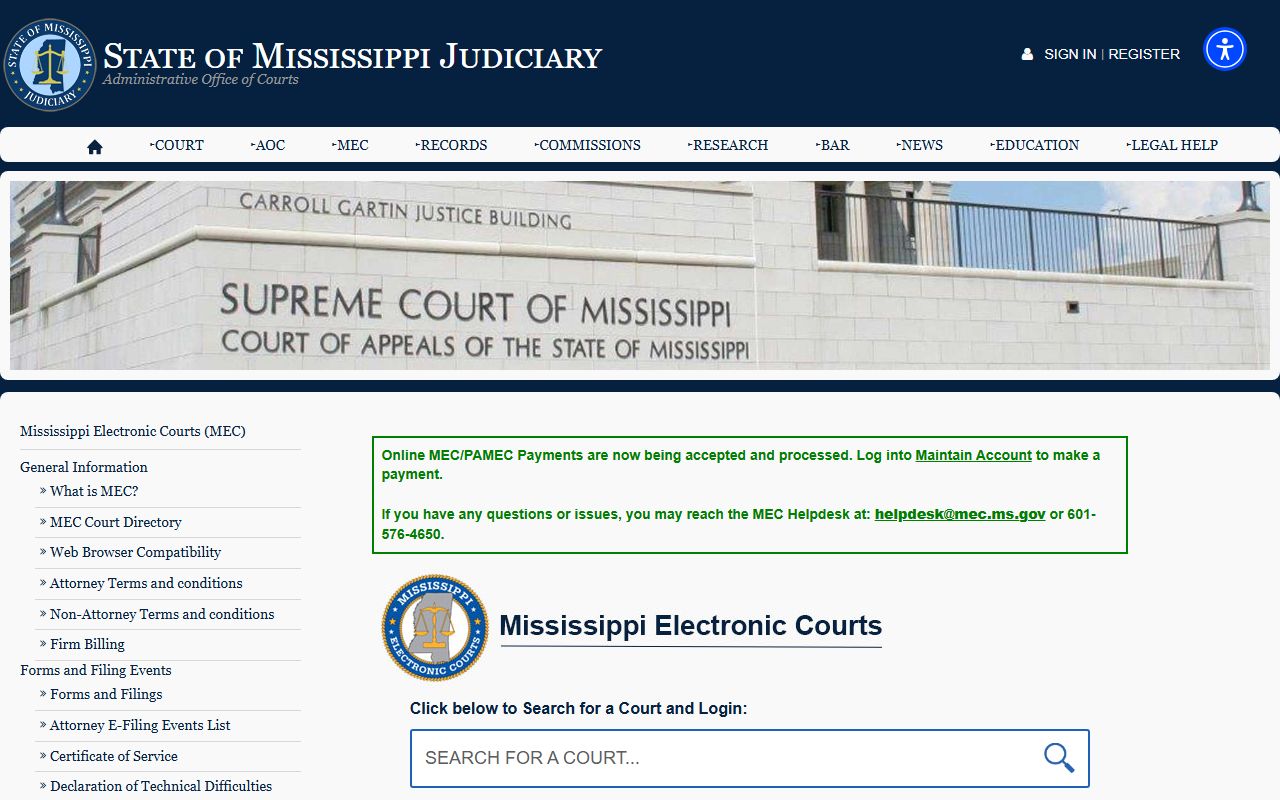
That page is the entry point for the electronic dockets that Copiah Circuit and Chancery cases now use. Once you know which court holds your case, the steps below keep the search in order.
- Identify the court level. Felonies and larger law cases belong to Circuit Court, while divorce, probate, and guardianship belong to Chancery Court. Traffic and misdemeanors usually sit in Justice Court.
- Search online only where the right portal exists. Use MEC and PAMEC for Circuit and Chancery electronic cases, and the city portal for municipal citations.
- If the online system is incomplete, contact the clerk who holds the file. The Circuit Clerk handles circuit cases, and the Chancery Clerk handles chancery and probate files.
- Ask for certified copies at the clerk's counter, not the search portal. Portals may show case data, but certified copies come from the office.
- For older files, request an in-person clerk search. The Chancery Clerk keeps records from county formation in 1823 to the present.
- For restricted records, expect redaction, no remote view, or a court-order requirement before release.
Copiah County Court Records Search Fields
The PAMEC public search exposes a small set of fields after you register and log in. Exact labels can shift once an account is active, and the format of a case number varies by court and case type. The table below lists the public fields observed for the Mississippi Electronic Courts search, which covers Copiah Circuit and Copiah Chancery cases. Treat each field as a way to narrow a search rather than a guarantee that a given case is viewable online.
| Field Label | Type | Required | Notes / Format |
|---|---|---|---|
| Court | Dropdown | Yes | Choose the participating court. Copiah Circuit and Copiah Chancery are the relevant options. |
| Case Number | Text | No | Use the exact case number when known. Format varies by court and case type. |
| Party Name | Text | No | Search by litigant or party name when the logged-in search permits it. |
| Filing Date / Date Range | Date | No | Narrows results when the portal exposes date fields. |
| Case Type | Dropdown | No | Civil, criminal, domestic, or probate. Availability depends on court and account permissions. |
| Register / Login | Link | Yes | Public users must register or log in before remote access is granted. |
Public users reach these fields only after creating an account. Registration and log-in run through the dedicated PAMEC page, shown on the PAMEC registration and login portal.
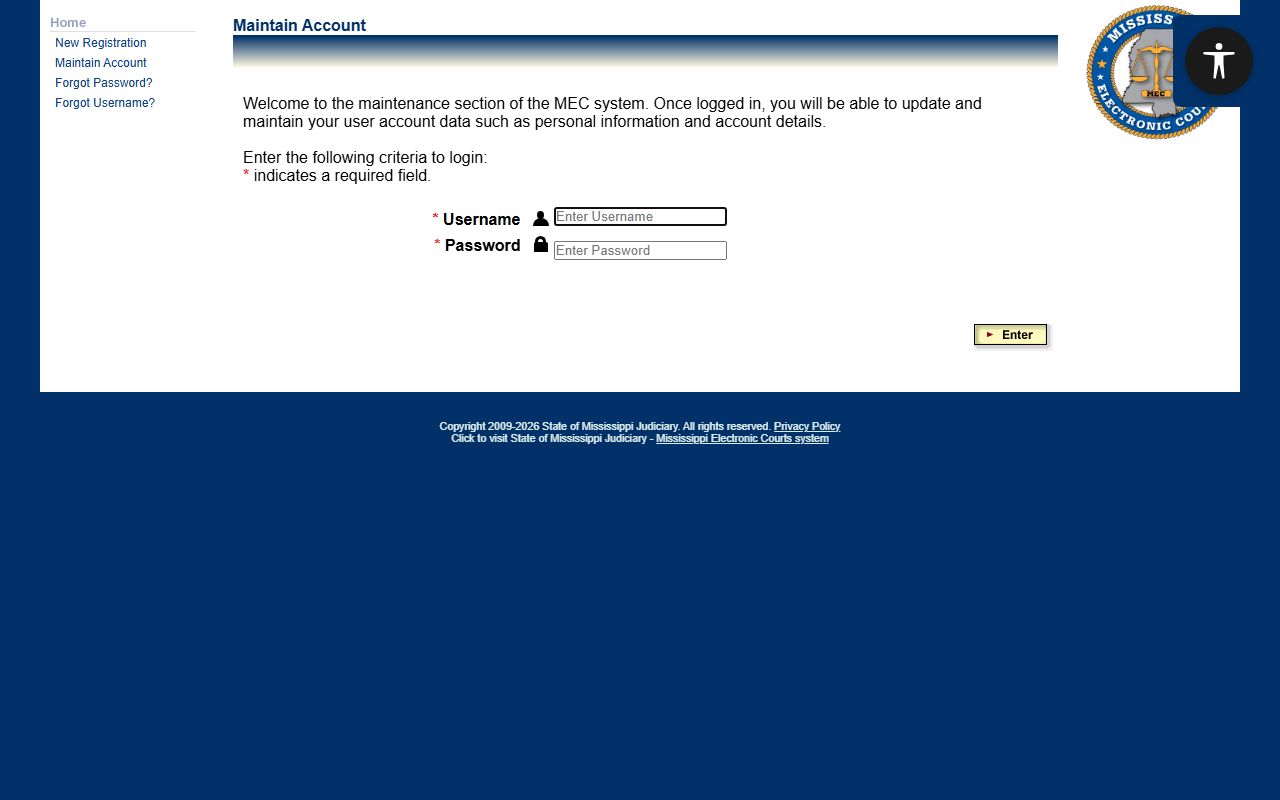
Set up that account first, then return to the court search to enter a name or case number. The Copiah Chancery Clerk also links an official land and will portal, though its public search form was not readable during review, so confirm access with the office.
Types of Copiah County Court Records
Copiah County court records fall into groups that follow the court that created them. Civil records come from Circuit Court law cases and Justice Court small claims, where eviction, open-account, declaration, and replevin matters are common up to a $3,500 limit. Criminal records follow a felony from a Justice Court affidavit and bond setting toward a grand jury, then into Circuit Court for indictment, plea, trial, and sentence. Family and probate records sit in Chancery Court, which handles divorce, custody, child support, estates, wills, and guardianships.
Other record types route to specific offices. Traffic citations are handled by Justice Court and the city courts, while juvenile and youth matters stay confidential in Youth Court. The Circuit Court paperless court-records order took effect for Copiah on January 1, 2022, which moved circuit case files into the electronic system.
The Mississippi Judiciary documented that paperless shift on its court news page, as seen on the MEC news update for Copiah Circuit Court.
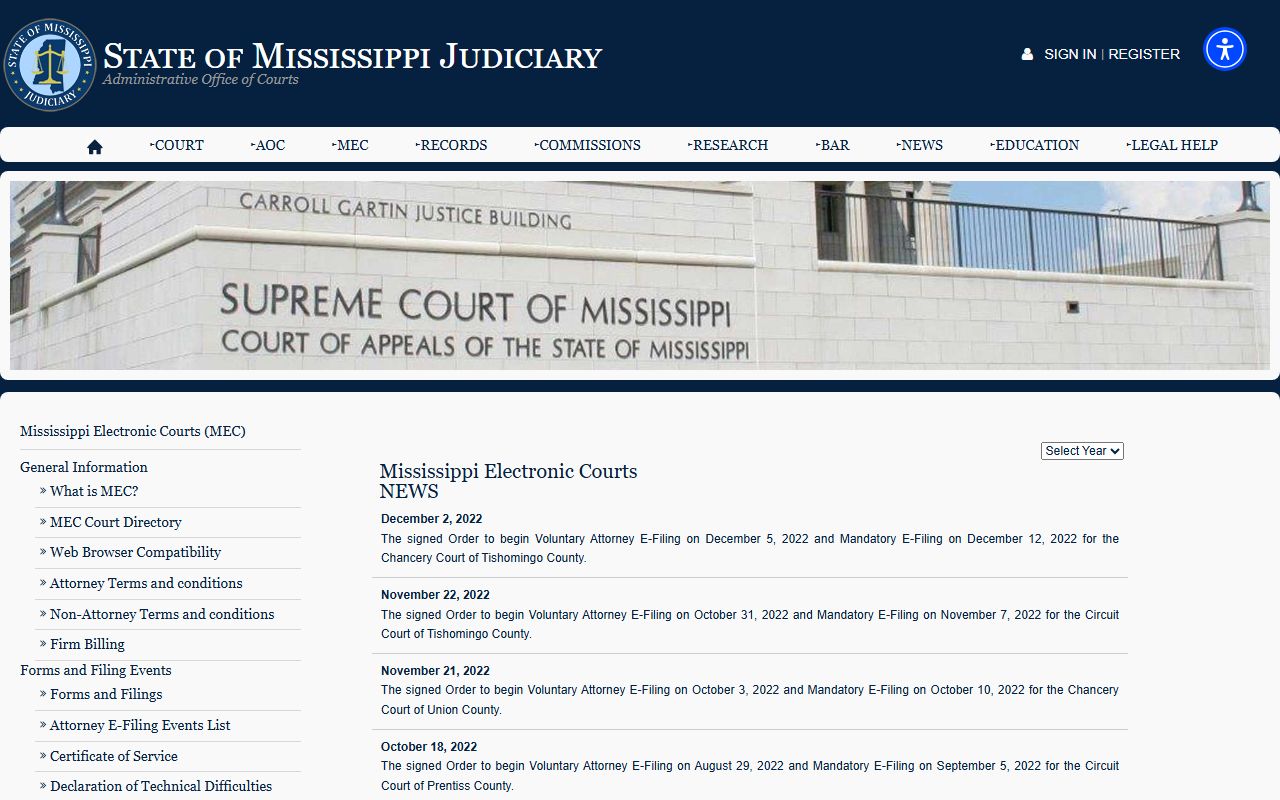
That order is why most newer Circuit Court files are searched online rather than on paper. The main record groups break down as follows.
- Civil records: complaints, answers, summons, motions, judgments, and execution docket entries from Circuit and Justice courts.
- Criminal records: affidavits, bond orders, indictments, pleas, verdicts, and sentencing from Justice and Circuit courts.
- Family and probate records: divorce, custody, estates, wills, and guardianships filed with the Chancery Clerk.
- Traffic records: citations and fine cases handled by Justice Court and city courts.
- Land and lien records: deeds, deeds of trust, liens, and lis pendens recorded by the Chancery Clerk.
What Copiah County Court Records Show
A Copiah County court record is a case file built up over the life of a matter. It opens with the initiating document, then adds every filing, order, and hearing until disposition. The exact look depends on the court, but most files share a common spine of identifying data and event history. The table below covers the core fields you will see on a case summary.
| Field | What It Shows |
|---|---|
| Case Number | The court-assigned identifier for the matter. Local format is not published, so use the exact number when requesting. |
| Filing Date | The date the complaint, petition, indictment, affidavit, or citation was filed. |
| Parties | Plaintiff and defendant, petitioner and respondent, state and defendant, or estate and ward. |
| Disposition | The final or current outcome, such as dismissed, disposed, adjudicated, bound over, or sentenced. |
Beyond the summary, an electronic case in MEC or PAMEC carries a fuller inventory of fields. The list below reflects the data expected in a logged-in case record, since no live sample case was inspected during review.
- Court
- Circuit Court or Chancery Court, with the division noted.
- Case Type
- Civil, criminal, domestic, probate, or guardianship.
- Attorneys
- Counsel of record for e-filed cases, with bar numbers on attorney filings.
- Docket Entries
- Filings, orders, motions, hearings, notices, judgments, and disposition entries.
- Documents
- E-filed PDFs that may be viewable after login and payment unless restricted.
- Financial
- Fines, costs, bond, or restitution in criminal and traffic contexts.
- Redactions
- Sealed and sensitive material withheld, with personal identifiers removed.
A docket grows entry by entry as a case moves, and a deeper view of those event lists appears on the court dockets overview. Each entry ties a date to an action, which is how a clerk and a judge track where a matter stands.
Public Access Framework for Copiah County Court Records
Mississippi treats government records as open unless a law says otherwise. The state's public-records policy in Miss. Code Section 25-61-1 says public records must be available for inspection and that automation cannot erode access. The Mississippi Ethics Commission explains the Public Records Act, takes complaints, and can issue subpoenas, hold hearings, and mediate disputes over records held by government bodies.
Court records carry their own limits on top of that policy. Judicial work product is exempt under Miss. Code Section 9-1-38, and many case types are restricted by court rule or sealing order. In practice, access starts with the office that holds the file. A written or in-person request should give party names, a case number if known, a date range, the record type, and whether you want a plain or certified copy. Statewide electronic filing reached every circuit, chancery, and county court in 2025, which widened remote access for cases that are not restricted.
The Mississippi Judiciary announced that statewide completion in a news release, shown on the statewide electronic filing announcement.
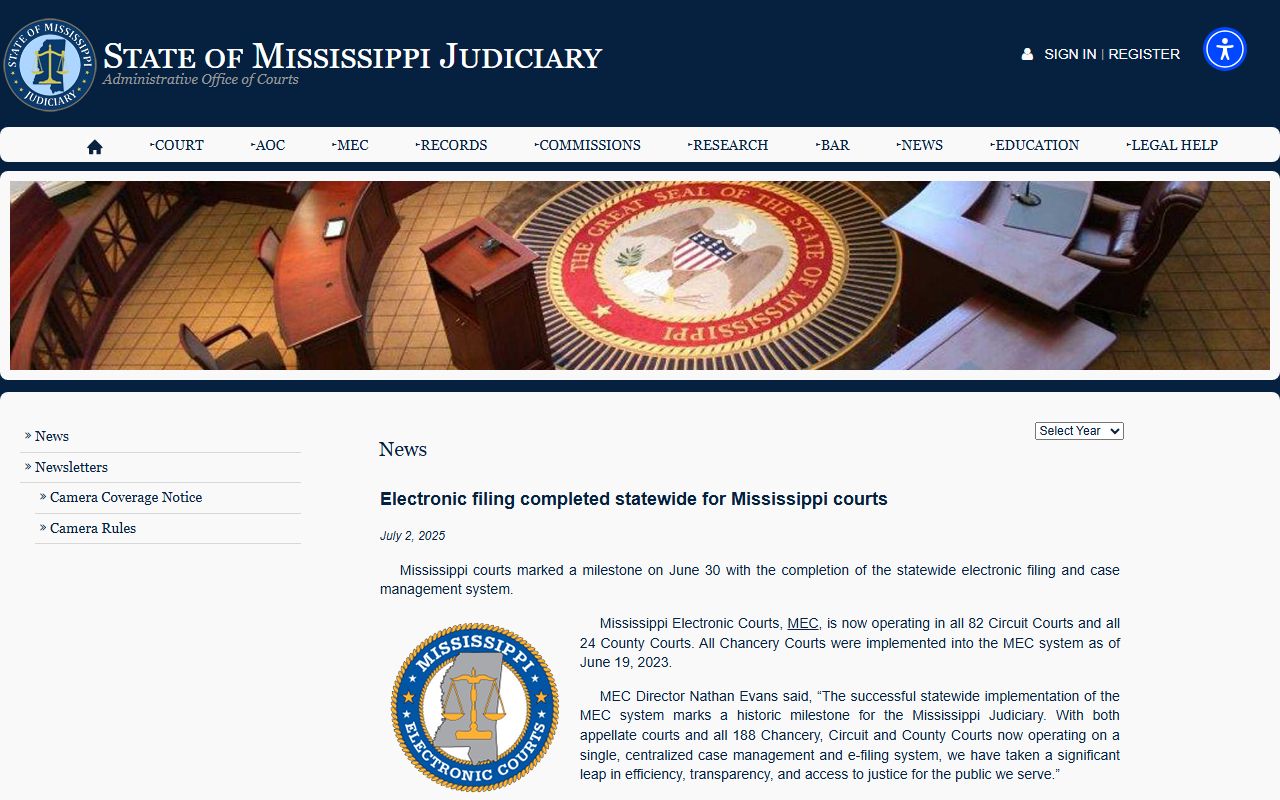
That milestone explains why newer Copiah cases are far easier to view online than older paper files. Remote access still depends on registration, fees, and whether a case is open to the public.
Note: Public remote access is not unrestricted access. PAMEC requires an account and fees, and sealed or sensitive cases never appear in remote results.
Records That Are Sealed or Confidential in Copiah County
Some Copiah court records are closed to general public view by statute or court order. Youth Court files are confidential and reach only authorized parties, staff, officials, and those with a court order. Adoption proceedings, mental health and substance commitments, and many custody, support, and domestic-protection matters are restricted in remote access and often redacted. Expunged records change how a case appears, so a search should not treat a cleared matter as freely available.
Two paths reopen a restricted file. To clear a criminal record, identify the court where the charge ended, then file an expunction petition there under Miss. Code Section 99-19-71. Gather the case number, charge, disposition, completion date, and proof that fines and costs are paid, since eligibility differs for arrests, dismissed charges, misdemeanors, and certain felonies. Youth Court sealing follows a separate route under Miss. Code Section 43-21-263, which lets the youth court seal a child's record when the statutory conditions are met. The clerk can confirm the filing location and fee, and a granted order tells agencies to restrict or remove the qualifying record.
The full criminal case file, including how charges resolve, is covered on the criminal court records overview.
In-Person Court Record Requests
The Copiah clerk role is split between two offices, so the right counter depends on the case. The Circuit Clerk keeps felony, circuit civil, jury, and marriage-license records at the courthouse. The Chancery Clerk keeps divorce, probate, guardianship, land, and will records a short distance away on South Lowe Street. Bring a photo ID, the party names, and a case number if you have one. Ask the clerk for certified copies and for the current copy fee, since copy charges were not published in the official county sources. Traffic and misdemeanor files are held by Justice Court, which can be reached by phone for hearing dates and fine amounts.
Copiah County Chancery Clerk
122 S. Lowe Street
Hazlehurst, MS 39083
(601) 894-3021
For records that have left the county court file, statewide systems take over. Certified marriage copies and divorce-index searches run through the Mississippi State Department of Health, custody and prison status run through the Mississippi Department of Corrections inmate search, and victim notification runs through VINELink. When a record is not online, a written clerk request remains the surest channel.