
What Is a Copiah County Court Docket
A docket is the chronological list of events in a case. It records each filing, motion, order, hearing, and ruling in the order they happen. In Copiah County, the Circuit Clerk keeps a general docket where the names of parties, pleas, indictments, appeals from lower courts, and other papers are entered. The clerk also keeps the execution docket and a complete record of the proceedings. So the docket is the spine of a case file. It tells you the case number, who the parties are, and what step the case is on.
A docket is not the full case file. The docket is the index of events, while the full file holds the actual documents, the complaint, the motions, the exhibits, and the signed orders. A Copiah County docket entry might read that a motion was filed, but the motion itself is a separate document. Many users only need the docket to confirm a court date or check whether a ruling has come down. Others need the full papers, which usually means a copy request to the Copiah County clerk.
Dockets differ by court. Copiah County Circuit Court dockets cover felony cases, criminal pleas, jury trials, and civil disputes at law. Chancery Court dockets cover divorce, custody, estates, wills, guardianships, and land matters. Justice Court keeps its own schedule for traffic, misdemeanor, and small civil hearings. Each court level in Copiah County uses its own format and its own access rules.
How to Find Copiah County Dockets Online
Circuit and Chancery dockets in Copiah County run through Mississippi Electronic Courts, the statewide e-filing and case-management system. The public access path is the Public Access Mississippi Electronic Case Management portal, reached through the Mississippi Electronic Courts page. Copiah County Circuit Court moved to paperless court records effective January 1, 2022, and in 2025 the state announced that electronic filing was complete statewide across circuit, chancery, and county courts. The catch is access. Public remote viewing is not the same as open access. PAMEC requires registration and login, and document viewing carries per-page fees.
The steps below outline the online path for a Copiah County docket search. Confirm details with the clerk if a case does not appear, since sealed and sensitive matters are gated.
- Open the PAMEC registration and login portal and create or sign in to a public access account.
- Choose the participating court. Copiah County Circuit Court and Copiah County Chancery Court are the relevant options.
- Search by case number if you have it, or by party name when the logged-in search allows it.
- Narrow by filing date or case type, then open the case summary.
- Review the docket entries, and pay any per-page fee to view an e-filed document.
Restricted case types will not show full documents remotely. Sealed cases and sensitive family, probate, juvenile, and domestic-protection categories are limited or withheld. When the online system falls short, the clerk counter remains the fallback.
Inside a Copiah County Docket Entry
Each line on a docket is one event. Read together, the entries trace the case from its first filing to its disposition. A single entry usually shows when something was filed, what was filed, who filed it, and a link to the document when the case is electronic. Criminal and traffic cases may also carry financial lines for fines, costs, bond, and restitution. The table below lists the fields a Copiah County docket entry commonly shows and what each one means.
| Field | What It Shows |
|---|---|
| Entry Date | The date the filing, order, hearing, or notice was entered on the docket. |
| Event Type | The kind of activity, such as a pleading, motion, order, hearing, continuance, judgment, verdict, or sentencing entry. |
| Filing Party | The party who filed the item, such as plaintiff or defendant, petitioner or respondent, or the State. |
| Hearing Data | Hearing date, time, judge or referee, and the courtroom or court office when an entry sets a hearing. |
| Document Link | The e-filed PDF, viewable after PAMEC login and payment unless the case is restricted. |
| Financial Line | Fines, costs, bond, restitution, or filing fees noted in criminal, traffic, or civil contexts. |
| Status / Disposition | The current or final outcome, such as open, pending, disposed, dismissed, bound over, or appealed. |
Personal identifiers are redacted on public Copiah County dockets. Social Security numbers, financial account numbers, minors' names, and sealed or youth-court material are withheld or limited by rule.
Courts That Publish Copiah County Dockets
No single county-branded site puts every Copiah County court docket in one public window. The working map runs by court level. Circuit and Chancery dockets live in the statewide electronic system. Justice Court keeps a hearing calendar but posts no online docket, so a phone call to the clerk is the way to confirm a date. Municipal citations sit with the city that issued the ticket. Each channel below points to the office that actually holds the record.
- Circuit Court dockets cover felonies, criminal pleas, jury trials, civil law cases, and appeals from lower courts, kept by the Circuit Clerk and searchable through PAMEC.
- Chancery Court dockets cover divorce, custody, estates, wills, guardianships, and land matters, kept by the Chancery Clerk and searchable through PAMEC.
- Justice Court keeps the schedule for traffic, misdemeanor, eviction, and small civil hearings, with no online docket published.
- Youth Court dockets for juvenile delinquency, abuse, neglect, and status offenses are confidential and not open to the public.
- Municipal courts in Hazlehurst and Crystal Springs handle city citations, checked through the city that issued the ticket.
For a Justice Court matter, the county directs people to call the court to set or confirm a hearing date on a traffic citation or a criminal charge. The clerk can be reached at (601) 894-3218 or (601) 894-4403. There is no public docket to browse for that court, so the phone line is the primary tool. To search the full set of case papers behind any docket, see the broader Copiah County court records options.
Note: Copiah County Justice Court does not post an online docket, so calling the Justice Court Clerk is the reliable way to confirm any hearing date or court time.
Copiah County Justice Court Hearing Schedule
Justice Court is the high-volume local court, and its hearings follow a set monthly rhythm rather than an online calendar. The county calls it a grass-roots court and notes that most citizens who enter a court system never go further than Justice Court. Knowing the standing schedule helps you guess when a matter is likely to be heard, though the clerk confirms the actual date. Preliminary hearings, contested misdemeanor hearings, and civil hearings each fall on their own day. The table below sets out the recurring pattern.
| Hearing Type | Day | Frequency |
|---|---|---|
| Preliminary hearings | Monday | Second Monday of each month |
| Contested misdemeanor hearings | Thursday | Once a month |
| Civil hearings | Wednesday | Twice a month |
Preliminary hearings apply to felony affidavits where the defendant was not bonded out, and the hearing tests probable cause for a grand jury bind-over. Justice Court civil jurisdiction tops out at $3,500 and covers cases such as eviction, replevin, and open-account claims. Because none of this posts online, call the clerk at (601) 894-3218 to confirm where a case stands.
Federal Court Dockets for Copiah County
Some cases tied to Copiah County are federal, not state, and those dockets live in a separate system. Copiah County sits in the U.S. District Court for the Southern District of Mississippi, Northern Division, with filings handled at the Jackson courthouse. Federal matters include federal crimes, civil rights actions, federal-question and diversity civil suits, habeas petitions, and Social Security appeals. These dockets are searched through PACER and the court's CM/ECF system, not through any county clerk.
The PACER public access system is the official front door for federal dockets that touch Copiah County and the rest of the nation. It charges per-page fees for document viewing and requires an account.
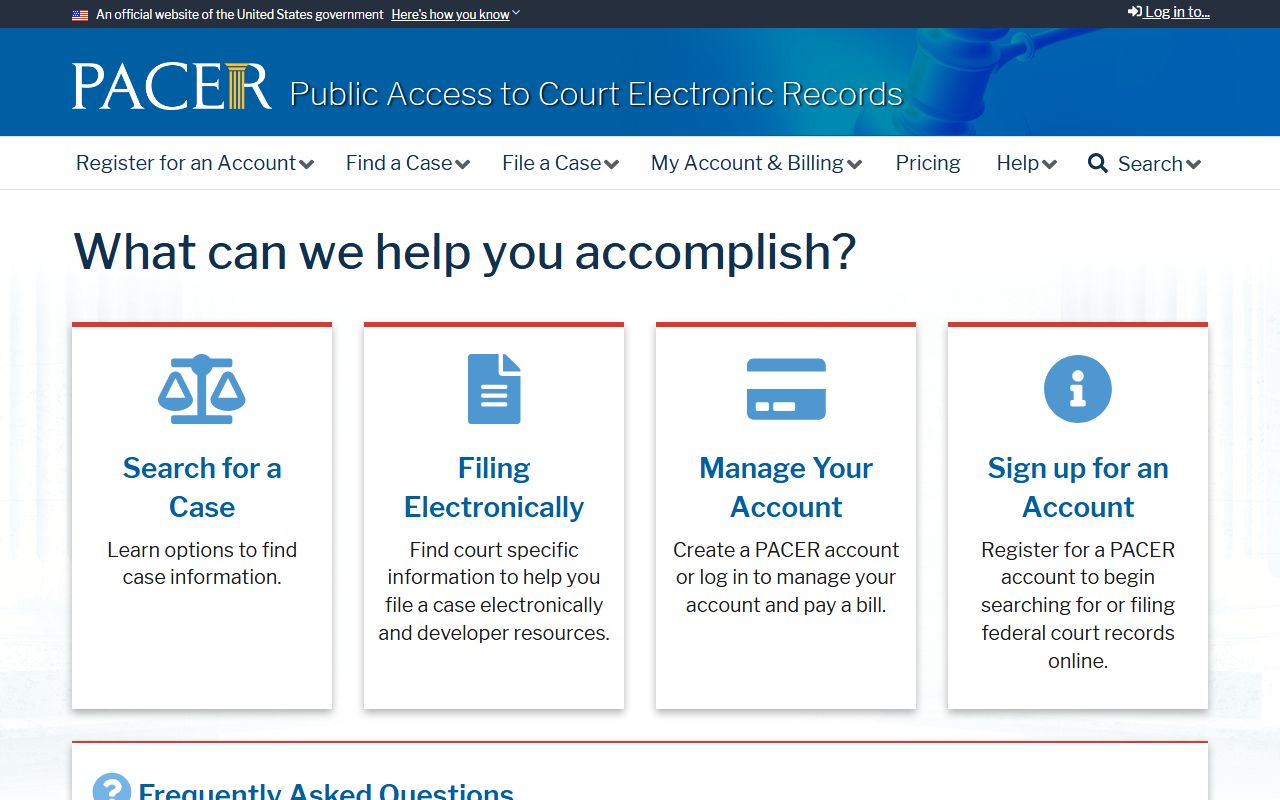
For a Copiah County federal case, PACER routes you to the right court once you know the district. To pull dockets for this area, use the Mississippi Southern District CM/ECF lookup, which links to the district's electronic case files.
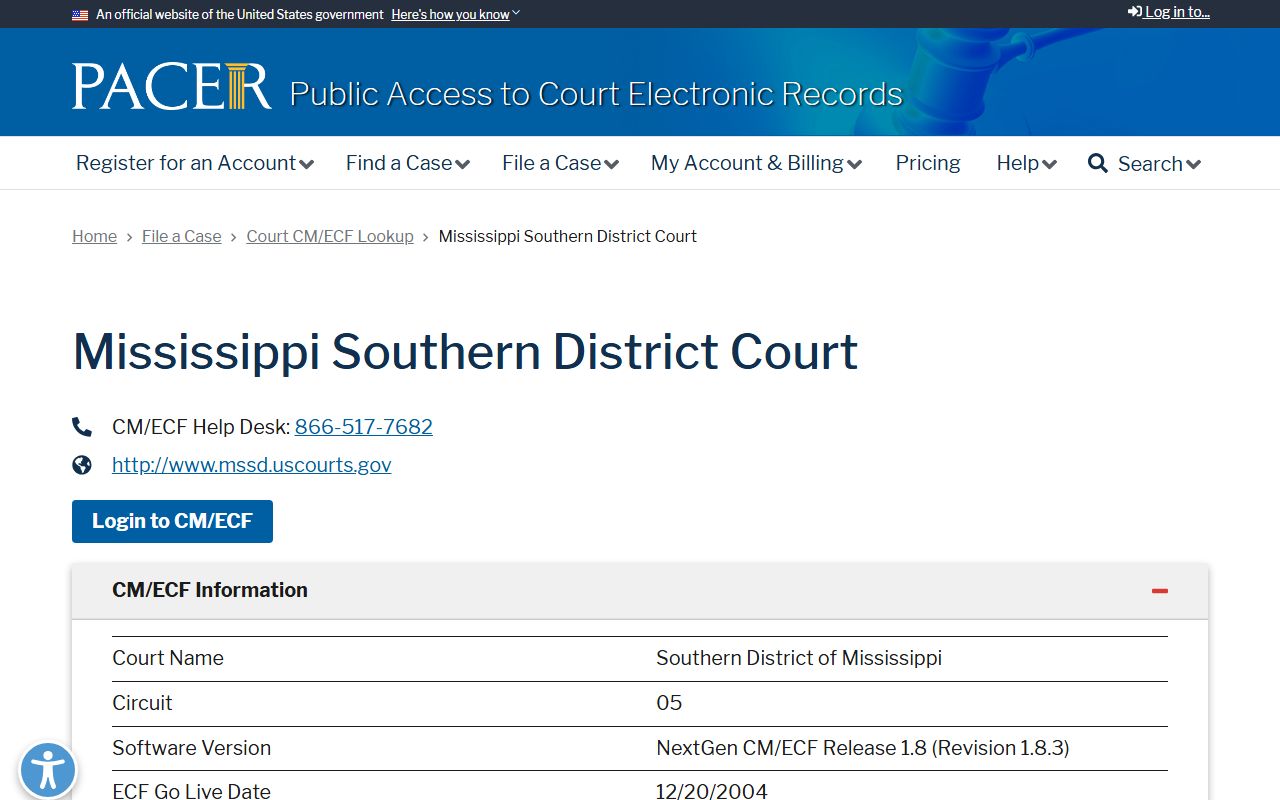
That CM/ECF page is the path to live federal dockets for the district that covers Copiah County. A free research alternative is CourtListener, which collects federal and state opinions and some docket data at no cost. CourtListener is helpful for background, but it is not the official record custodian, so verify anything important against PACER or the clerk.
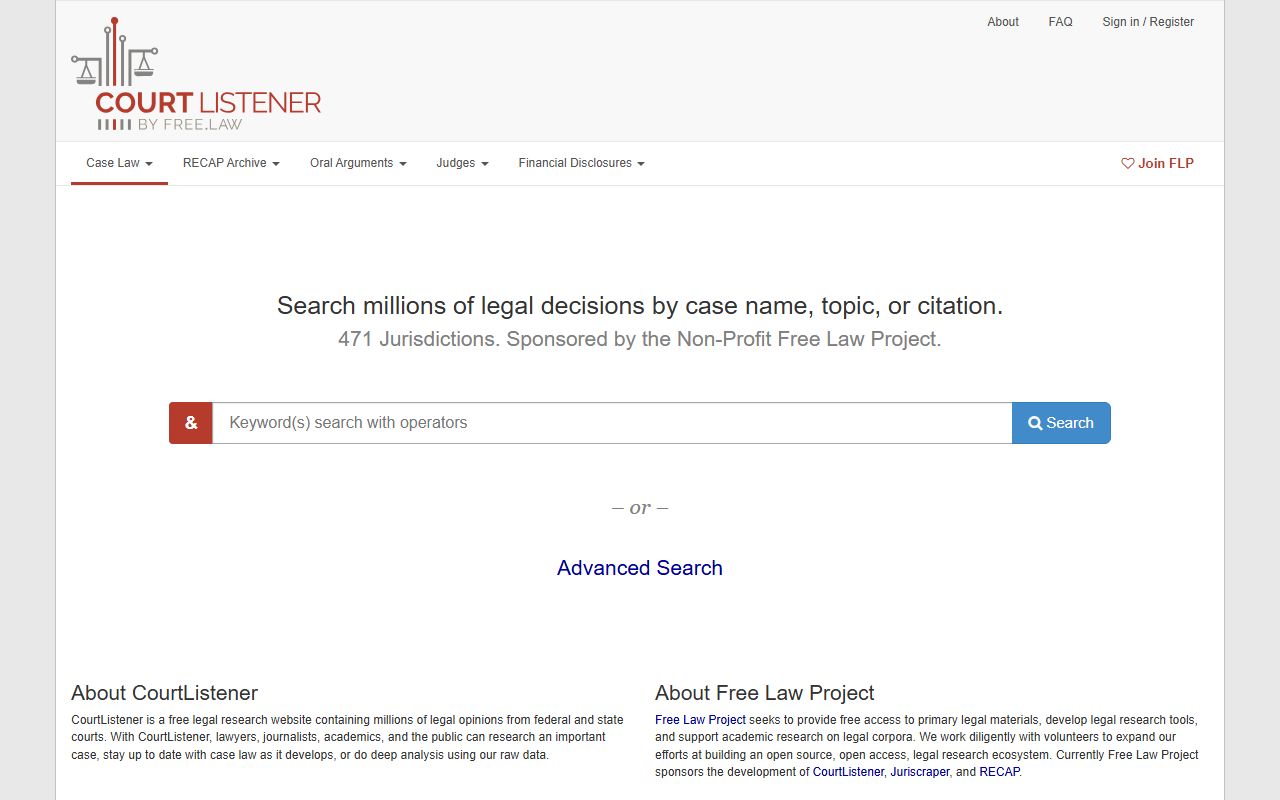
CourtListener can surface a docket or ruling you did not know existed, which makes it a good starting point. For certified or complete federal records, return to PACER or the Jackson court office.
Docket vs. Full Case Record
The docket and the case file are not the same thing. A docket is a list of events. The full case record is the stack of documents behind those events, including motions, exhibits, and signed orders. People often confuse the two, then wonder why a docket entry has no readable document attached. The comparison below sets the difference side by side.
| Docket | Full Case Record | |
|---|---|---|
| Format | List of dated entries | Full documents and filings |
| Access | Often viewable online through PAMEC | May require a fee, a login, or a clerk visit |
| Use | Track case progress and court dates | Legal review, evidence, certified copies |
| Source | Court e-filing system | Circuit or Chancery Clerk |
Certified copies do not come from a docket screen. They come from the clerk who holds the file. The Copiah County Circuit Clerk answers at (601) 894-1241 and the Chancery Clerk at (601) 894-3021. For older or non-digitized files, an in-person clerk search is often the only route, and the Chancery Clerk offers in-house searches running from county formation in 1823 to the present.
Reading a Copiah County Docket
Docket entries use short labels and legal shorthand. A few terms unlock most of what you will see. A motion is a request asking a judge to act. A continuance is a postponement of a hearing. An indictment is the formal felony charge returned by a grand jury, and a plea is the defendant's answer to a charge. Bound over means a case was sent from a lower court toward the grand jury after probable cause was found. A capias is a warrant-like order to arrest, often after a failure to appear.
Status and disposition lines tell you where a Copiah County case stands. Common values include open, pending, disposed, closed, dismissed, bound over, adjudicated, sealed, expunged, transferred, appealed, and continued. A disposition is the final or current outcome of a case or a charge. In criminal matters the disposition may sit next to a sentence, probation conditions, restitution, and fines or costs. When a record is sealed or expunged, the public docket should no longer be read as if the case is freely open.
If a Copiah County docket entry makes no sense, the clerk can explain it. Dockets are working tools for the court, not consumer summaries, so the labels favor brevity over plain English.
Note: Mississippi public records law favors access, but judicial work product, youth-court files, and sealed cases carry statutory limits that keep some dockets off the public record.