
Criminal Court Records in Copiah County
A criminal court record is more than an arrest entry. It is the running file the clerk opens when a criminal case begins. Each filing, order, and hearing gets logged in that file. The record shows what the state alleged, how the defendant answered, and how the court resolved it. The charges as filed sit at the front. Pleas, motions, and rulings follow in order. The disposition and sentence close it out. For the charges themselves and how they change, the Copiah County arrest and charge records page goes deeper into the charging side.
Two trial courts produce most criminal files in Copiah County. The Circuit Court is the felony court. It handles indictments, felony pleas, jury trials, sentencing, and appeals from lower courts. The Circuit Clerk keeps the general docket, plea and indictment records, orders, verdicts, and the full proceedings. Justice Court handles misdemeanor affidavits and the first steps on felony affidavits. Misdemeanors are tried in Justice Court. Felony matters get an initial appearance and bond there, then can move up to the grand jury and Circuit Court.
Because the file follows the case, the holding court changes as the case moves. A felony may start as an affidavit in Justice Court and end as a judgment in Circuit Court. Knowing that path is the key to finding the right record.
How a Copiah County Criminal Case Moves Forward
A criminal case in Copiah County runs through clear stages. Each stage adds new entries to the court record. Many cases start with a sworn affidavit. Deputies, state troopers, city police, wildlife officers, narcotics agents, constables, and private citizens can all file one. After an arrest, the sheriff books the person into the county jail.
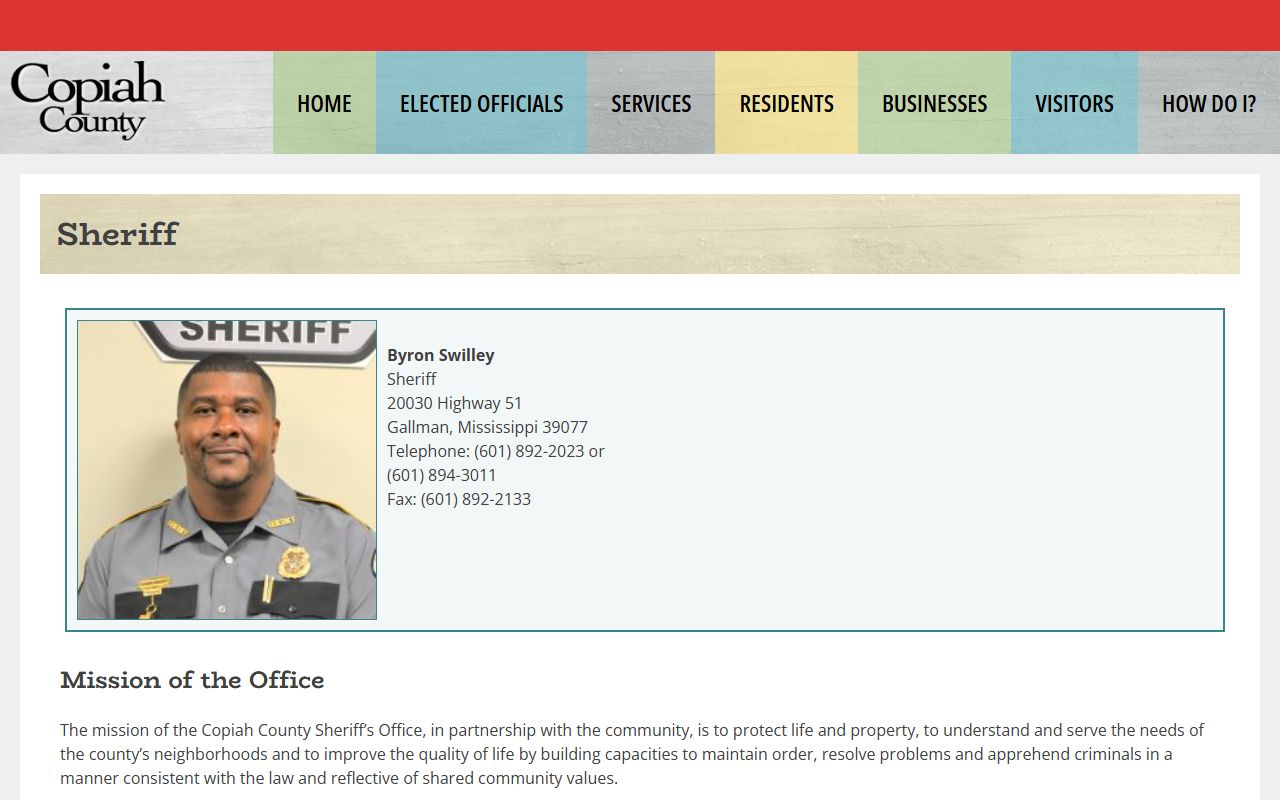
The arrest and booking side belongs to the Copiah County Sheriff's Office, which runs the jail in Gallman.
The Copiah County Sheriff's Office page profiles Sheriff Byron Swilley and his command staff, the people who handle arrests and custody before the court file opens.
That booking step starts the paper trail that the court file later absorbs through bond orders and charge documents. From there the case follows the flow below.
Case flow: Affidavit / Charges Filed › Justice Court Initial Appearance & Bond › Grand Jury / Indictment › Arraignment › Pretrial and Plea or Trial › Disposition › Sentencing
| Stage | What Happens |
|---|---|
| Initial Appearance and Bond | Justice Court advises the person of the charge and sets bond. Detained defendants may request a preliminary hearing to test probable cause. |
| Grand Jury and Indictment | For felonies, a grand jury decides whether the case proceeds by indictment. The case is then bound over to Circuit Court. |
| Arraignment | The Circuit Court formally reads the charges and the defendant enters a plea, such as guilty or not guilty. |
| Pretrial and Motions | Lawyers file motions, exchange evidence, and argue legal issues. Many cases end here with a plea agreement. |
| Trial | If no plea is reached, a judge or jury hears proof and returns a verdict. |
| Disposition and Sentencing | The court records the outcome and, on a conviction, sets the sentence with any fines, restitution, or probation terms. |
Misdemeanors take a shorter path. They are tried in Justice Court without a grand jury or bind-over. The record there is smaller but follows the same logic of charge, plea, hearing, and outcome.
How to Search Copiah County Criminal Court Records
There is no single free county website that holds every Copiah County criminal court record in one search box. The working route depends on the court. Circuit Court felony files run through Mississippi Electronic Courts. Public users reach those through PAMEC after they register and log in. Older, sealed, or non-digitized files come straight from the clerk. Misdemeanor and Justice Court matters are checked with the Justice Court clerk.
- Identify the court. Felonies belong to Circuit Court, while misdemeanors and early felony steps sit in Justice Court.
- For Circuit cases, open Mississippi Electronic Courts and register or log in through PAMEC.
- Choose Copiah Circuit Court, then search by defendant name or case number.
- Narrow by case type and filing date when the portal shows those fields, then open the case to read the docket and disposition.
- Request a certified copy from the Circuit Clerk when you need an official document for legal use.
PAMEC charges per-page fees, and sealed or sensitive cases do not appear in remote search. When a file is gated or missing online, the clerk counter is the fallback. The fields below reflect what the statewide portal exposes after login.
| Field Label | Type | Required | Notes |
|---|---|---|---|
| Court | Dropdown | Yes | Choose Copiah Circuit Court for felony cases. |
| Case Number | Text | Optional | Use the exact number when known. Format varies by court. |
| Party Name | Text | Optional | Search by defendant or party name when permitted. |
| Filing Date Range | Date | Optional | Narrows results to a date window. |
| Case Type | Dropdown | Optional | Criminal, civil, domestic, and more, based on account access. |
| Register or Login | Link | Yes | Public users must create an account for remote access. |
Justice Court does not appear in that portal. For misdemeanor cases, hearing dates, and preliminary hearings, the county directs people to contact the Justice Court clerk by phone or in person at the Frost Street office.
What a Copiah County Criminal Court Record Shows
A Copiah County criminal court record is organized by field. Reading it is easier once you know what each part means. The same fields show up whether you view the file online or pull it at the clerk counter. The table maps the core fields to what they tell you about the case.
| Field | What It Shows |
|---|---|
| Case Number | The unique number the court assigns. Use it for any copy request. |
| Court and Division | Whether the case sat in Circuit, Justice, or another court. |
| Defendant | The person charged, listed against the State of Mississippi. |
| Charges | The offenses as filed, with the statute and severity level. |
| Plea | The defendant's answer, such as guilty, not guilty, or no contest. |
| Docket Entries | Every motion, order, hearing, and continuance in date order. |
| Disposition | The current or final outcome of each charge. |
| Sentence | Any jail or prison time, probation, fines, costs, or restitution. |
Some data is redacted by rule. Social Security numbers, financial account numbers, minor names, and victim identifiers may be hidden. Sealed, youth court, and other protected material does not show at all. For the full set of court files beyond criminal cases, the Copiah County court records page covers civil, family, and probate matters too.
Charges Versus Convictions
A charge is not a conviction. This is the single most misread part of a criminal record. A charge means the state has accused someone. A conviction means a court found guilt by verdict or plea. A criminal court record can show charges that were later dropped, dismissed, or ended in acquittal. Reading a charge as guilt is a common and costly mistake.
| Charge | Conviction | |
|---|---|---|
| Stage | Accusation filed | Verdict or guilty plea |
| Burden of Proof | Probable cause | Beyond a reasonable doubt |
| Meaning | Case is open or pending | Guilt is established |
| Public Record | Yes | Yes |
Both charges and convictions can appear in the public file. The disposition field is what tells the two apart. Always read it before drawing any conclusion about a case.
Reading Dispositions and Sentences
The disposition is the heart of any criminal court record. It states how a charge ended. Common values include guilty, not guilty, dismissed, and nolo contendere, which means no contest. A case may also show as bound over, continued, or nonadjudicated. Status terms such as open, pending, disposed, and closed track where the case stands at a glance.
The sentence sits next to a guilty disposition. It spells out the punishment the court ordered. A sentence can mix jail or prison time with probation, fines, court costs, and restitution to a victim. Probation lets a person stay out of custody under set conditions. The record lists those terms and any later changes to them.
When a code is unclear, the clerk can confirm what it means for a specific file. Never guess at a disposition you do not understand.
Who Prosecutes Copiah County Criminal Cases
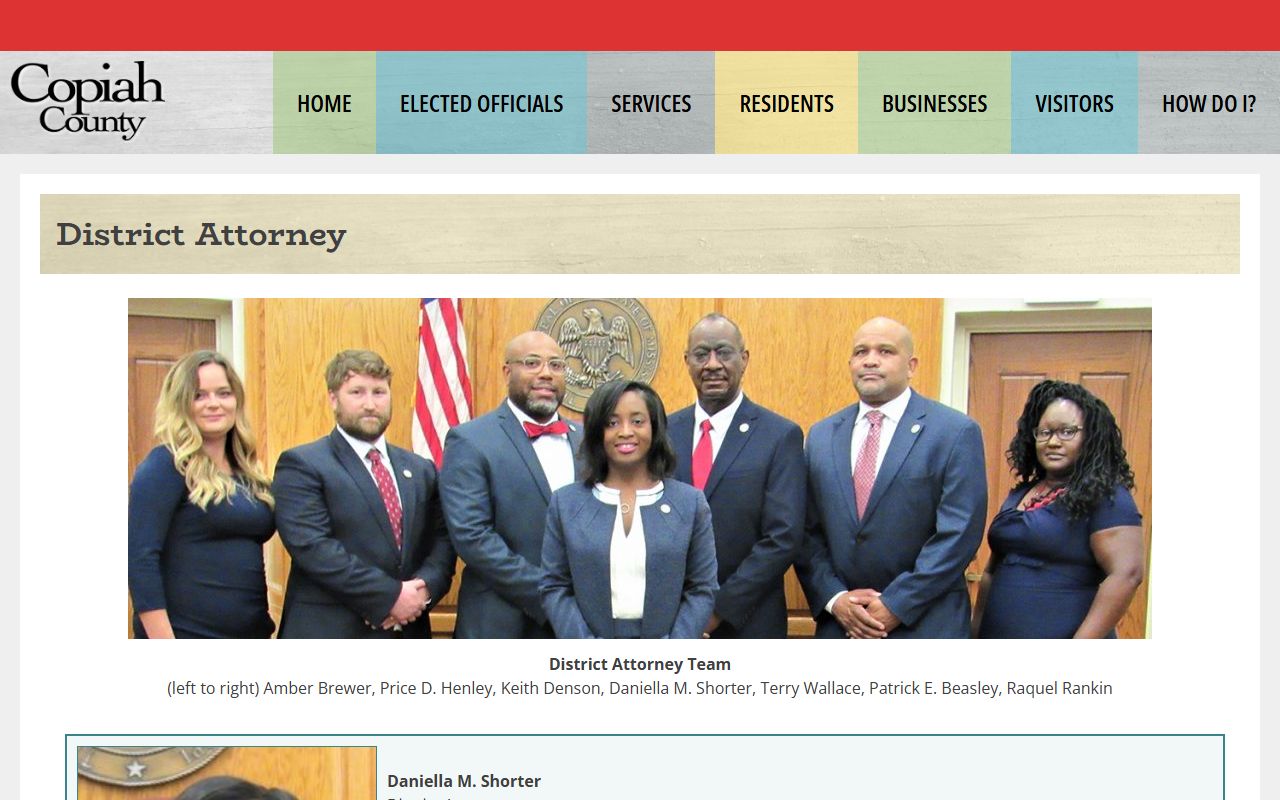
Felony cases in Copiah County are prosecuted by the District Attorney. Daniella M. Shorter leads that office. Her office handles all felony prosecutions in Copiah, Claiborne, and Jefferson counties, which form the local circuit district. The Copiah office sits at 272 West Gallatin Street, across from the courthouse, and can be reached at (601) 894-5040. Assistant district attorneys, a victim assistant coordinator, and a criminal investigator round out the staff. A Bad Check Unit in the courthouse handles bad-check complaints.
The official county page profiles the office that drives felony cases through Circuit Court.
The Copiah County District Attorney page lists the prosecutor, staff, and office locations for the three-county district.
On the defense side, there is no single Copiah County public defender office page. The Mississippi Office of State Public Defender keeps a statewide directory of defenders. Defendants who cannot afford a lawyer should ask the court handling their case how to request appointed counsel. The court, not a website, makes that appointment.
Note: District attorney records reflect what the state charges, while the court file is the official record of how the case was decided.
Sealed Versus Expunged Criminal Records
Sealing and expunction both limit who can see a criminal record, but they work differently. A sealed record is hidden from general public view while it still exists. An expunged record is treated as if it never happened for most purposes. Mississippi sets the rules for clearing qualifying records by statute, and eligibility is narrow.
| Sealed | Expunged | |
|---|---|---|
| Visibility | Hidden from the public | Removed and treated as never existing |
| Law Enforcement | Limited access remains | Very limited access |
| Common Use | Youth court and protected files | Qualifying adult arrests and convictions |
| Mississippi Basis | Section 43-21-263 for youth records | Section 99-19-71 for criminal records |
To pursue an expunction, a person first finds the court where the charge ended, whether Justice Court, a municipal court, or Circuit Court. The petition is filed in that court. The main eligibility statute is Miss. Code Section 99-19-71, which separates arrests, dismissed charges, nonadjudicated matters, misdemeanors, and certain felonies. A petitioner should gather the case number, the charge, the disposition, the completion date, proof that fines and restitution are paid, and any prior expunction history. The clerk confirms the filing location and fee. If the judge grants the order, agencies and clerks then restrict or remove the qualifying record. Eligibility is not safe to assume from a website summary, so check the statute and the clerk first.
Public Access to Copiah County Criminal Records
Mississippi treats most court records as open to the public. Access starts with the office that holds the file. Circuit criminal cases go to the Circuit Clerk at 100 Caldwell Drive or to MEC and PAMEC when the case is electronic and not restricted. Misdemeanor and Justice Court matters require a Justice Court contact. When a record is not online, a written or in-person clerk request is the practical route, listing party names, the case number if known, a date range, and the record type.
Key Statutes:
Miss. Code Section 25-61-1 sets the state policy that public records stay open for inspection unless the law says otherwise.
Miss. Code Section 9-1-38 exempts certain judicial work product shared among judges and aides from the Public Records Act.
Disputes over government records can go to the Mississippi Ethics Commission, which takes complaints and mediates access issues. Judicial records still carry special limits, and many case types are restricted by court rule, statute, or a sealing order. Federal criminal cases follow a separate track through the U.S. Attorney and federal courts, not the county clerk.
The federal prosecutor for this region publishes its own criminal case news and contacts.
The U.S. Attorney for the Southern District of Mississippi handles federal criminal matters that arise in Copiah County, which are filed in federal court rather than the county system.
Keeping the county and federal tracks separate avoids a common dead end when a case cannot be found in the local clerk's files.
Related Mississippi Criminal Record Channels
Some criminal information sits in statewide systems rather than the county case file. These channels complement a Copiah County record search. They do not replace the court file, but they answer questions the file alone cannot. Two state databases are worth knowing.
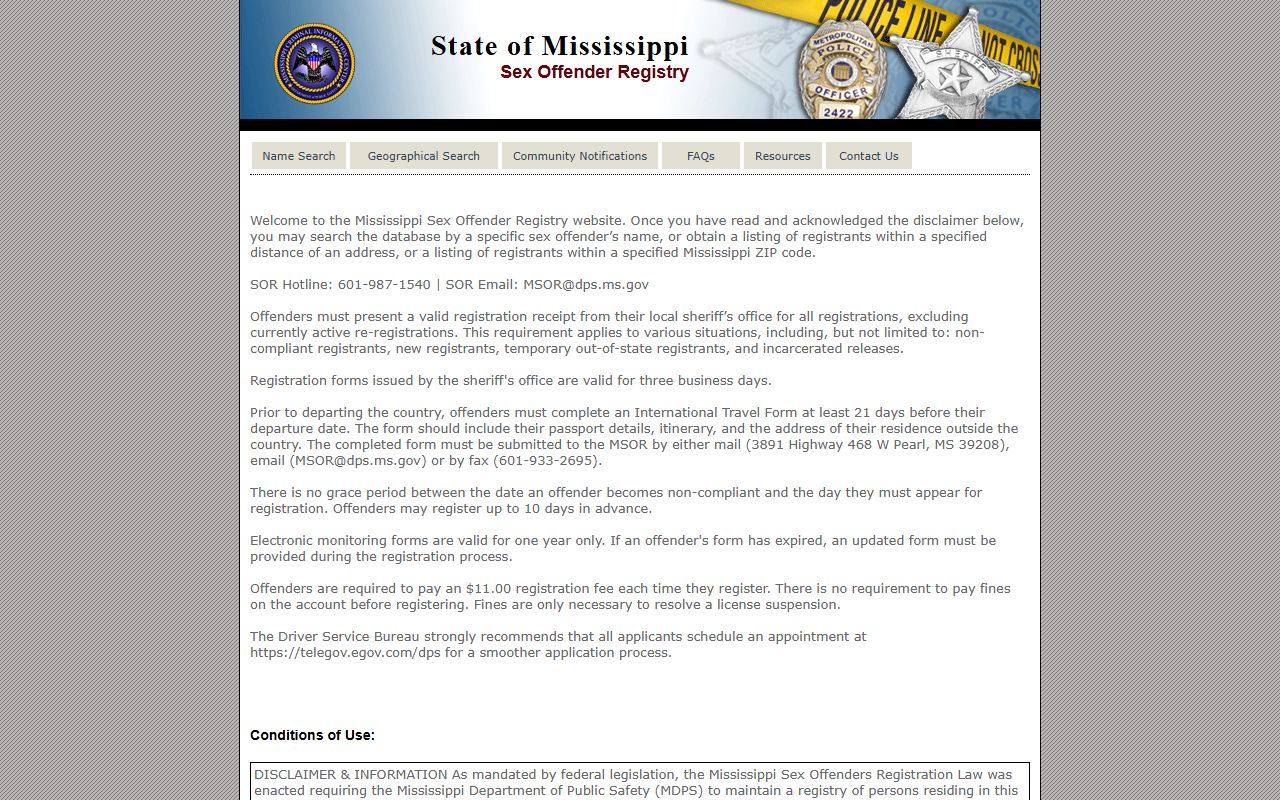
The state maintains a public registry of sex offenders searchable by the public.
The Mississippi Sex Offender Registry lets anyone check registered offenders by name and area across the state, including Copiah County.
That registry tracks registered offenders, while crime trends come from a separate state portal run by public safety officials.
The Mississippi crime statistics portal publishes reported offense data from agencies that include the Copiah County Sheriff's Office and local police.
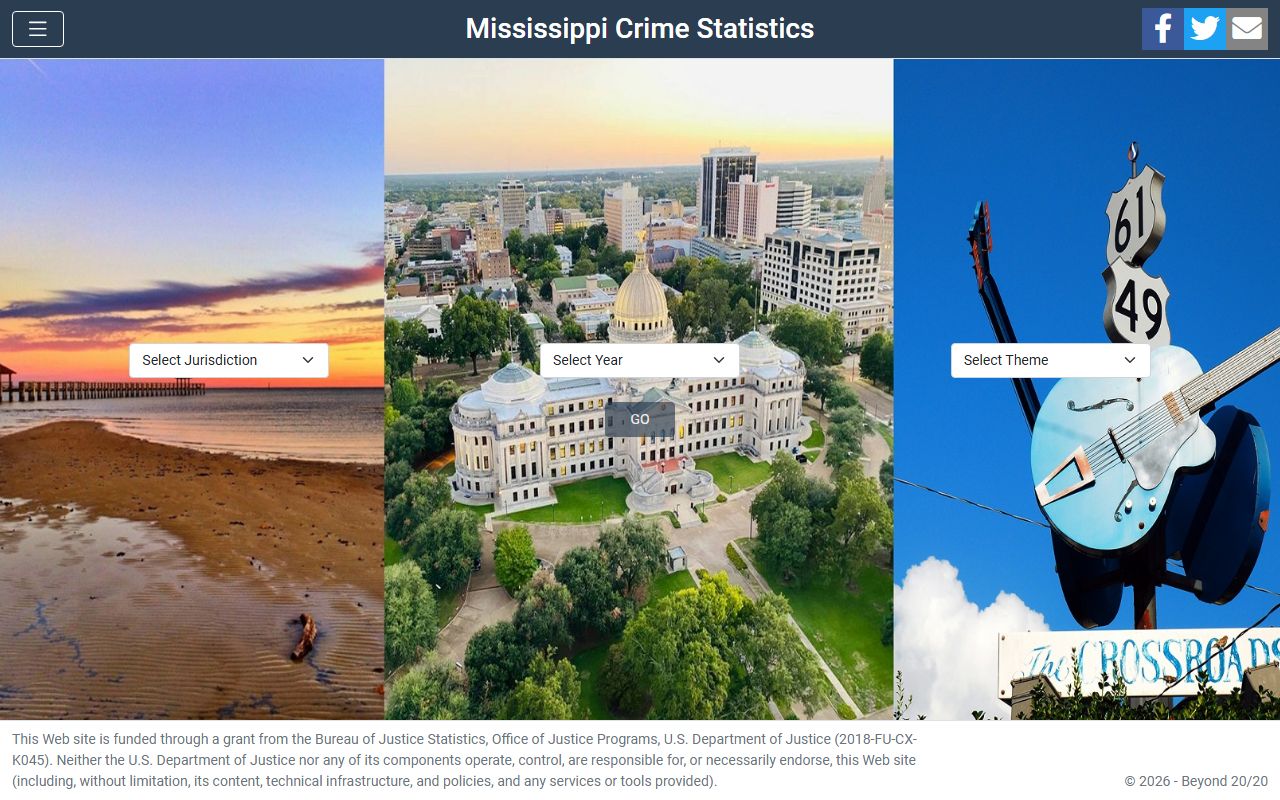
These tools show the wider picture around a case. For custody status after a sentence, statewide systems such as the corrections inmate search and victim notification cover prison and release questions the court file does not.
Restricted Copiah County Criminal Court Records
Not every criminal record is open. Several categories are confidential by law. Youth Court records are confidential and cover juvenile delinquency, abuse and neglect, and status offenses. Access there is limited to authorized parties or a court order. Sealed and expunged files do not appear in normal public searches. Ongoing matters may also be withheld in part while a case is active.
- Youth Court and juvenile records, confidential under state law.
- Sealed records, hidden from general public view.
- Expunged records, removed for most public purposes.
- Personal identifiers such as Social Security and account numbers.
- Victim and minor information protected by redaction.
When a file appears blank or missing, that is often by design rather than error. The clerk can confirm whether a record is restricted, sealed, or simply not digitized yet.
Note: A record you cannot find online may still exist on paper at the clerk's office, so a direct request is the surest way to confirm it.