
How to Search Copiah County Court Records
Copiah County does not run a single website that searches every court at once. The working path depends on the court that holds the file. Most Circuit and Chancery cases now live in Mississippi Electronic Courts, the statewide e-filing and case-management system. Older, sealed, or paper files stay with the clerk. Traffic and misdemeanor matters usually sit in Justice Court, and city tickets stay with the police or court that wrote them.
A few details make any search faster. Have the full name of a party, or the case number if you know it. Know the rough filing date and the type of case. That tells you whether to start with the Circuit Clerk, the Chancery Clerk, or Justice Court. Remote access through the state portal is not the same as open access, so plan for a login and per-page fees on documents.
The county lists each court and elected office in one spot on the official Copiah County home page.

From that home page, the courts menu links the Circuit Clerk, Chancery Clerk, Justice Court, and Youth Court that keep Copiah County court records. Each office is the right first contact for the records it holds.
Public Access Mississippi Electronic Case Management, known as PAMEC, opens a set of search fields once an account is active. The table below shows what users meet at the search screen.
| Field Label | Type | Notes |
|---|---|---|
| Court | Dropdown after login | Choose Copiah Circuit or Copiah Chancery Court. |
| Case Number | Text | Use the exact number when you have it. |
| Party Name | Text | Search by a litigant name when the account allows it. |
| Filing Date or Range | Date | Narrows results to a time window. |
| Case Type | Dropdown | Civil, criminal, domestic, or probate, by court. |
| Register or Login | Links | An account is required for remote access. |
For records that are not online, the steps below follow the path the county and state actually use.
- Identify the court level. Felonies and large civil suits belong to Circuit Court, while divorce, estates, and guardianships belong to Chancery.
- Search online only when the right portal exists. Use the state Mississippi Electronic Courts system for Circuit and Chancery cases.
- If the portal is incomplete, call the clerk who holds the file. Circuit Clerk: (601) 894-1241. Chancery Clerk: (601) 894-3021.
- Ask for certified copies at the clerk's counter, not the search screen. Portals show case data, but certified copies come from the office.
- For older files, use an in-person clerk search. The Chancery Clerk offers genealogy searches from 1823 to the present.
- For restricted cases, expect redaction, no remote view, or a court order before release.
The Copiah County Judicial System
Mississippi courts run on a clear ladder. The Supreme Court and the Court of Appeals sit at the top. Below them are the Circuit Courts, Chancery Courts, Justice Courts, Municipal Courts, and Youth Courts. Copiah County's official site lists Chancery Court, Circuit Court, the District Attorney, Justice Court, and Youth Court. There is no separate Copiah County Court, so do not look for one.
Circuit Court is the law court of record for the county. It hears felony cases, civil suits at law, jury trials, and appeals from the lower courts. Chancery Court is the equity and family venue for divorce, custody, estates, wills, guardianships, land matters, and commitments. Justice Court handles traffic, misdemeanors, evictions, and small civil claims. District Attorney Daniella M. Shorter prosecutes felonies for Copiah, Claiborne, and Jefferson counties in the 22nd Circuit District.
Case flow: Justice Court › Circuit Court › Mississippi Court of Appeals › Mississippi Supreme Court
The state judiciary explains how these levels fit together on its About the Courts overview.
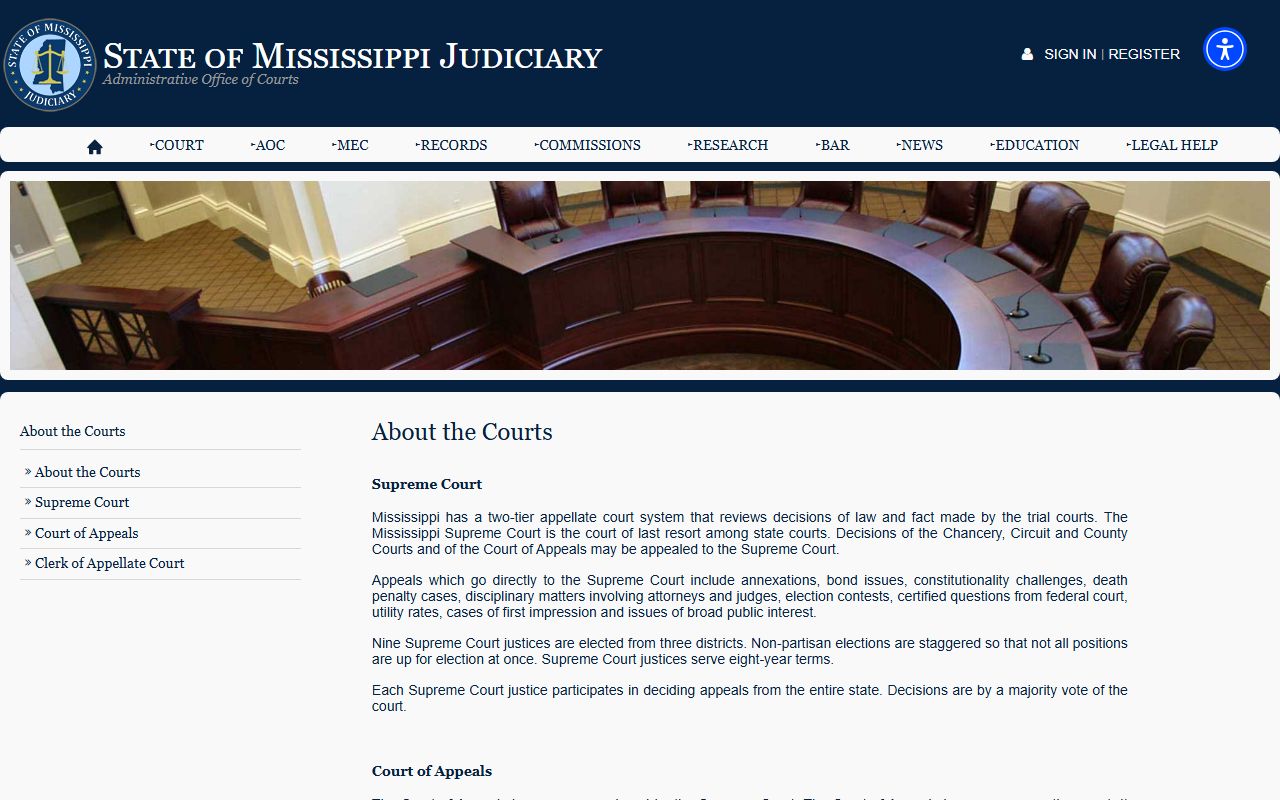
That overview maps the same court levels that produce Copiah County court records. The table below sorts the local courts by what each one hears.
| Court | Jurisdiction | Case Types |
|---|---|---|
| Circuit Court | Law court of record | Felonies, civil suits at law, jury trials, appeals from lower courts |
| Chancery Court | Equity and family | Divorce, custody, estates, wills, guardianships, land, commitments |
| Justice Court | Limited jurisdiction | Misdemeanors, traffic, evictions, small civil up to $3,500, felony first appearances |
| Youth Court | Juvenile | Delinquency, abuse and neglect, status offenses (confidential) |
Copiah County Courthouse and Court Offices
The courthouse stands in downtown Hazlehurst at 100 Caldwell Drive. It was built in 1902 and 1903 and carries Mississippi Landmark status. The county's court offices are clustered nearby rather than all under one roof. The Circuit Clerk sits at the courthouse, the Chancery Clerk and Youth Court sit on South Lowe Street, and Justice Court sits on West Frost Street. So "go to the courthouse" can be the wrong answer for probate, divorce, youth, or traffic questions.
The Mississippi Department of Archives and History keeps the building's record on its Copiah County Courthouse history page.
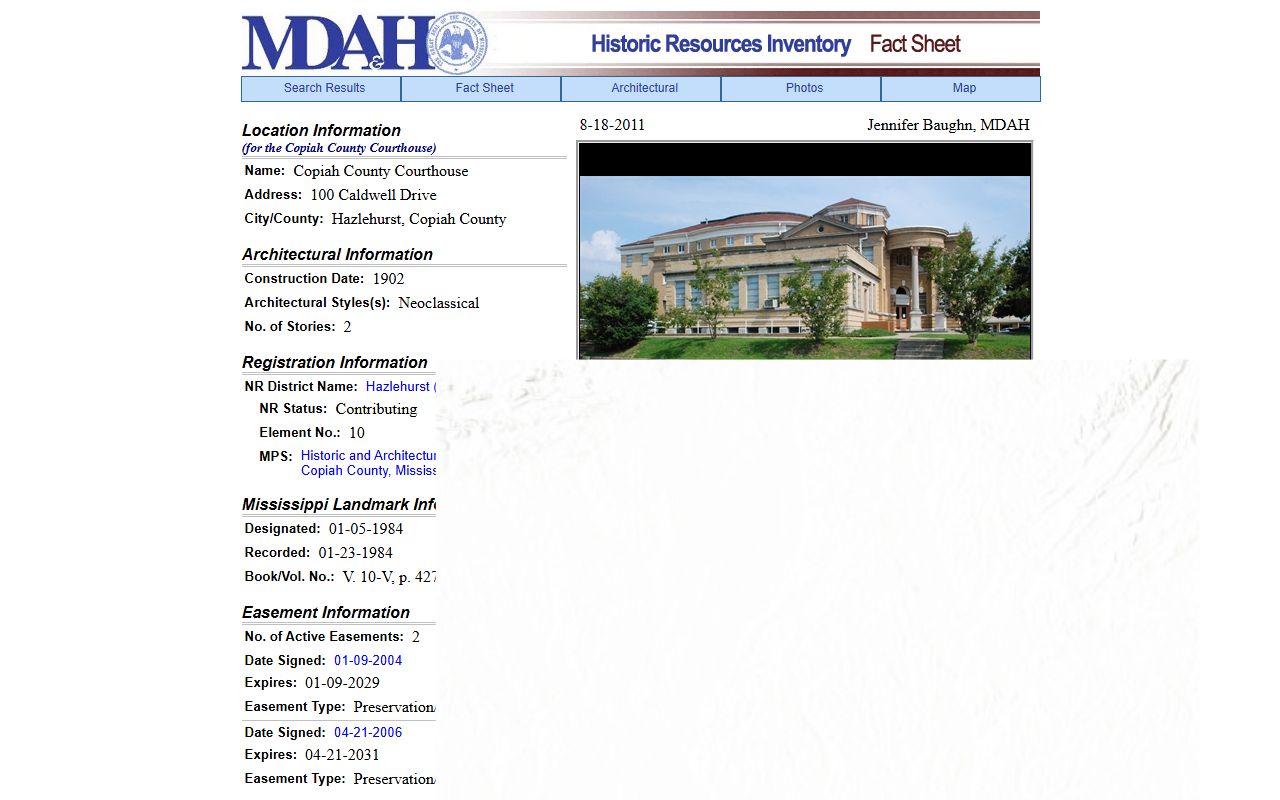
That archive page confirms the address and the historic status that draws records visitors downtown. The cards below give the three offices that hold most Copiah County court records.
Copiah County Circuit Clerk
100 Caldwell Dr.
Hazlehurst, MS 39083
(601) 894-1241
derrick@copiahcountyms.gov
Copiah County Chancery Clerk
122 S. Lowe Street
Hazlehurst, MS 39083
(601) 894-3021
dsandifer@copiahcountyms.gov
Copiah County Justice Court
121 W. Frost Street
Hazlehurst, MS 39083
(601) 894-3218
mcarr@copiahcountyms.gov
Types of Court Records Available in Copiah County
Copiah County court records fall into a few broad groups. Criminal cases run from arrest affidavits to indictment, plea, and sentence. Civil cases cover money claims, contracts, and property disputes. Family records cover divorce, custody, and support. Probate covers wills and estates, and traffic covers citations and fines. Juvenile matters stay sealed.
Each group has a home court. Felony criminal and larger civil cases sit in Circuit Court. Family, probate, and land records sit in Chancery Court. Most traffic and misdemeanor records sit in Justice Court, and youth records sit in Youth Court.
The county's courts FAQ page answers many first questions about citations, hearing dates, and civil suits.
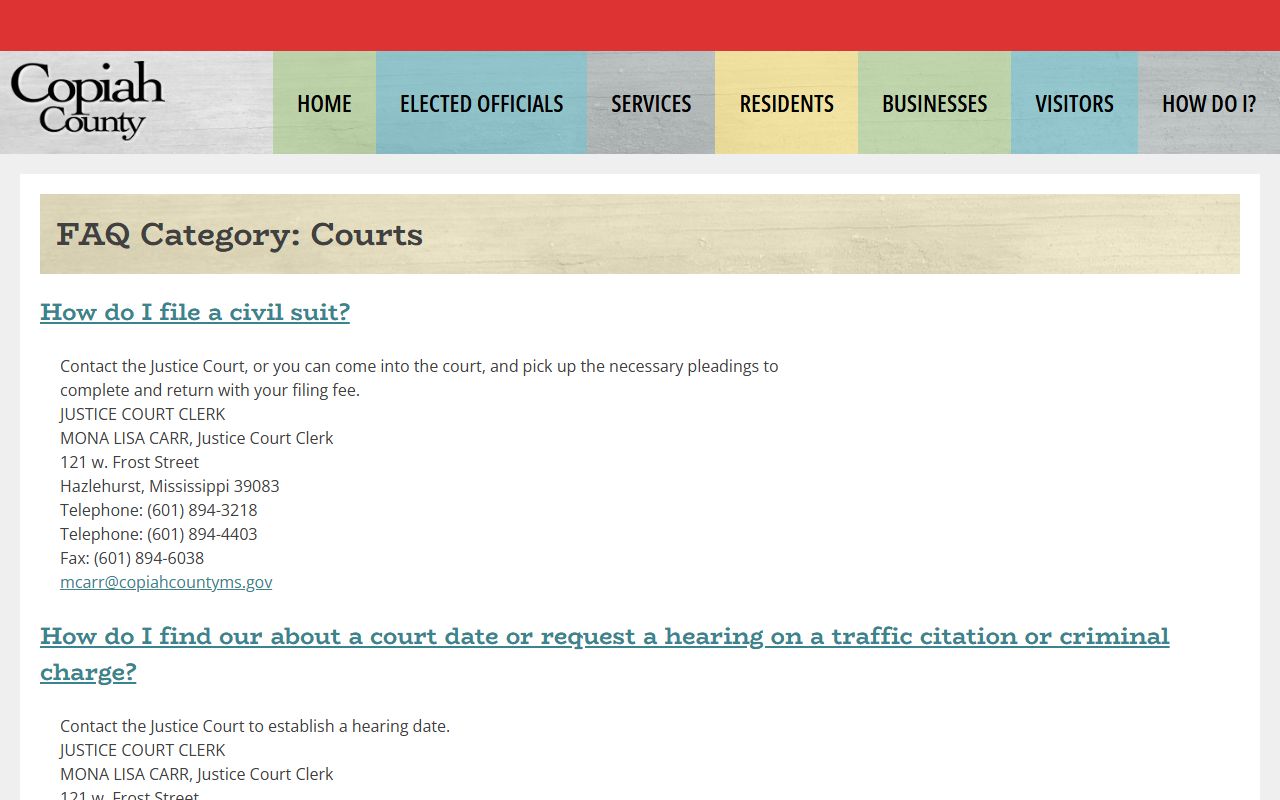
That FAQ points readers to Justice Court for traffic and hearing questions, which matches the record groups listed below.
- Criminal records include affidavits, indictments, pleas, verdicts, and sentencing orders.
- Civil records include complaints, answers, motions, judgments, and execution docket entries.
- Family and divorce records include divorce decrees, custody orders, and support files.
- Probate records include wills, estate petitions, guardianships, and conservatorships.
- Traffic records include citations, court dates, fines, and disposition.
What Copiah County Court Records Show
A court file is built from a set of fields. The same fields show up whether the case is criminal, civil, or family. A record lists the case number, the court, the filing date, and the parties. It tracks the charge or cause, the docket entries, the hearings, and the financial terms. The disposition shows where the case stands.
Status values change as a case moves. A file may read open, pending, disposed, dismissed, bound over, adjudicated, sealed, expunged, transferred, appealed, or continued. The table below explains the core fields a reader meets.
| Field | What It Shows |
|---|---|
| Case Number | The unique label the court assigns to the file. |
| Filing Date | The date the complaint, petition, indictment, or citation was filed. |
| Parties | Plaintiff and defendant, petitioner and respondent, or estate and heir. |
| Charges or Cause | The criminal charge, civil claim, or family or probate category. |
| Disposition | The current or final outcome of the case or charge. |
| Sentence or Judgment | The penalty, award, or order entered by the court. |
Public Access Laws for Copiah County Court Records
Mississippi treats most government records as open. The Public Records Act says records must be open for inspection unless a law says otherwise. Court files follow that rule, but judicial work and many sensitive case types carry their own limits. The Mississippi Ethics Commission handles disputes when a public body denies access.
For court records, the practical route starts with the office that holds the file. If a record is not online, a written request with party names, a case number, a date range, and the record type usually works. The Ethics Commission complaint process asks for a written denial when one exists.
The Ethics Commission explains the law on its public records page.
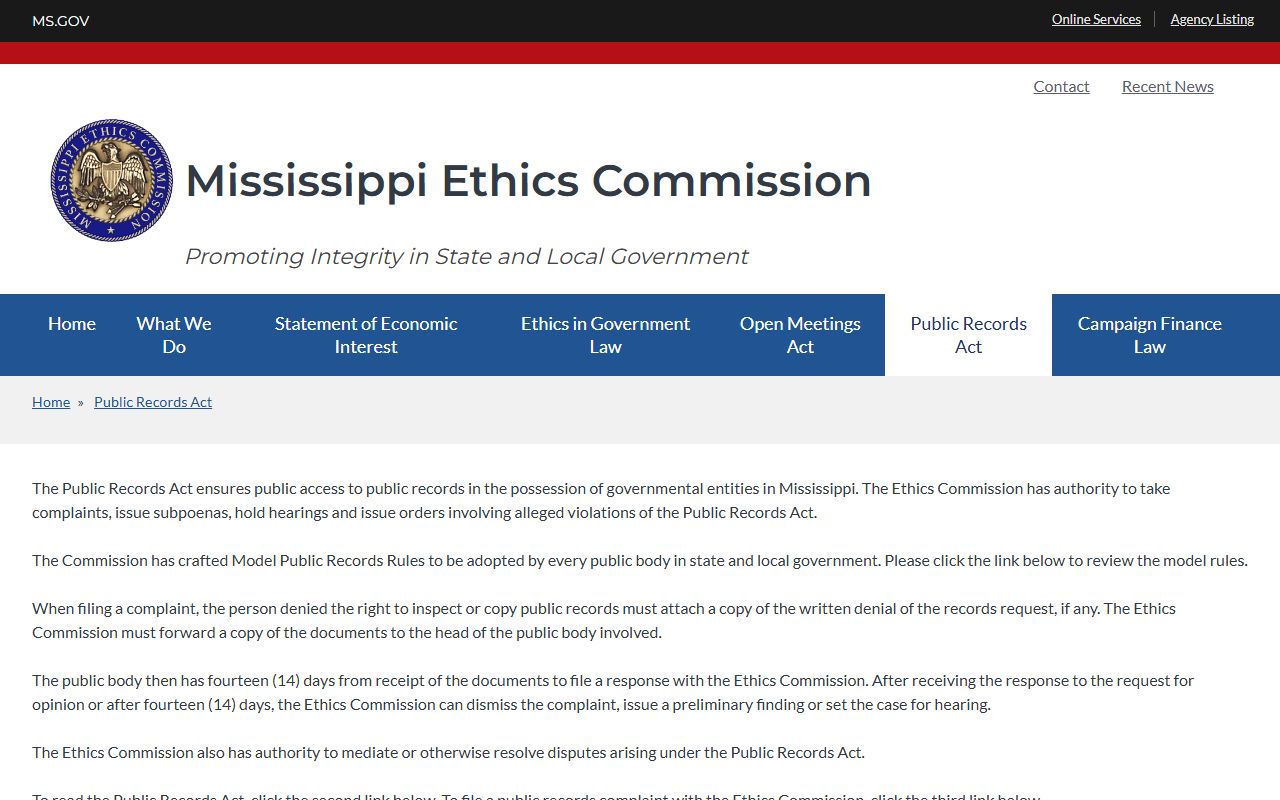
That page lays out how access requests and complaints work for Copiah County court records. The statutes below set the core rules.
Key Statutes:
Miss. Code § 25-61-1 sets the policy that public records stay open for inspection unless a law restricts them.
Miss. Code § 9-1-38 exempts records that judges and their aides develop together from the Public Records Act.
Miss. Code § 99-19-71 governs expunction of qualifying misdemeanor and felony records.
Miss. Code § 43-21-251 keeps youth-court records confidential except as the law allows.
Miss. Code § 43-21-263 lets the youth court seal a child's records when statutory conditions are met.
Records That Are Restricted or Confidential
Not every Copiah County court record is open to the public. Some files are sealed by law, and others are limited in remote access. The categories below are the ones readers meet most often.
- Youth Court and juvenile records, which are confidential by statute.
- Sealed and expunged criminal records, which drop from public search after an order.
- Adoption files, which require a court order or statutory authority.
- Mental health and substance commitments handled in Chancery Court.
- Custody, support, and domestic-protection details, which are often redacted.
The Mississippi Ethics Commission posts the text of the Public Records Act and its exemptions on its Public Records Act page.
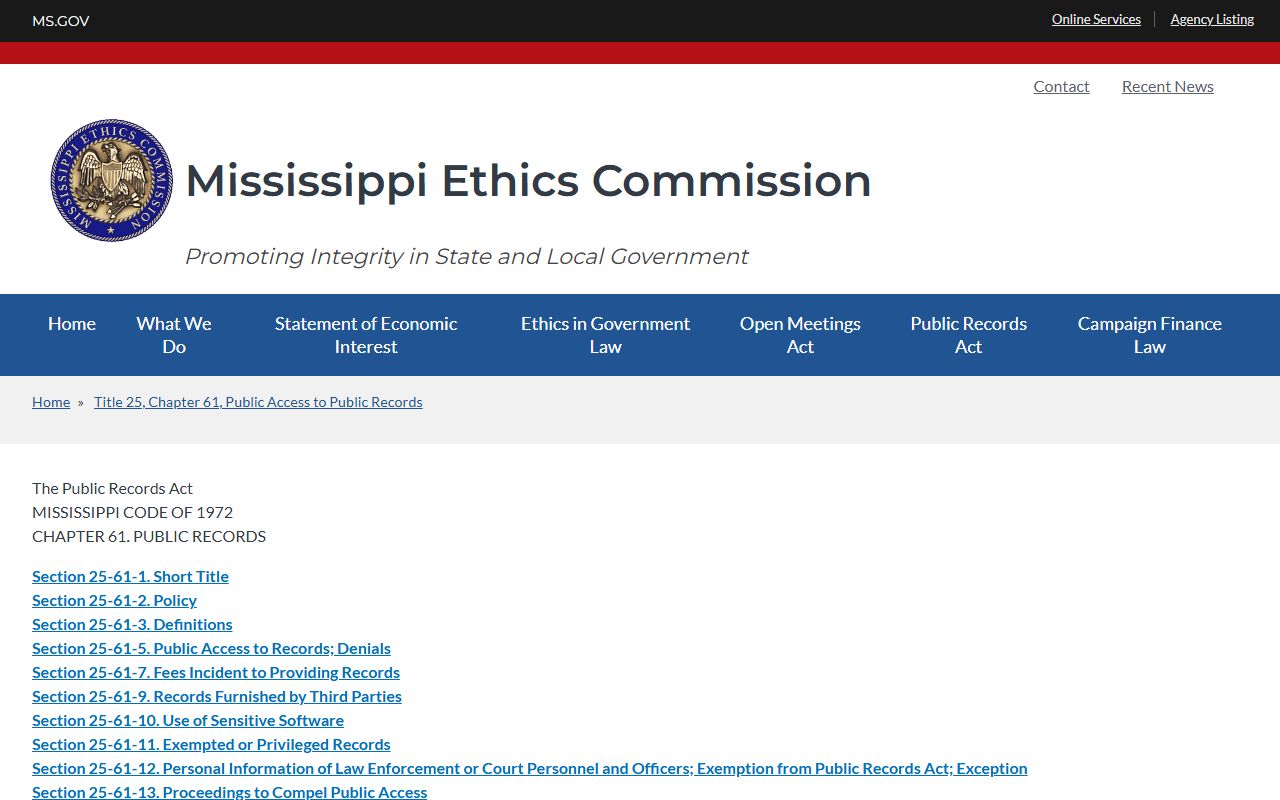
That text shows where the law shields a record from open inspection. A person who wants to clear a record should find the court that closed the case, gather the case number and proof of completion, and review the expunction statute before filing, since eligibility rules are narrow.
Note: Do not assume a record qualifies for expunction from a website summary, because the statute treats arrests, dismissals, and convictions in different ways.
Specialty Courts and Problem-Solving Programs
Copiah County does not publish an official problem-solving or intervention court page. The Justice Court page lists no drug court, DUI court, veterans court, or mental-health court, and no county page names a treatment-court judge, eligibility rule, or program length. That gap is worth stating plainly rather than filling with claims that the county has not posted.
Some related work still happens through the regular courts. Chancery Court holds commitment jurisdiction for people impaired by mental disability or by substance abuse, though that is a commitment power, not a separate treatment court. Justice Court is the front end for criminal cases, since it sets first appearances and bond and holds preliminary hearings for detained defendants. Youth Court outcomes can include counseling, community service, probation, or treatment placement, depending on the case.
Mississippi runs intervention courts as its problem-solving framework in many districts. Because Copiah sits in the 22nd Circuit District, anyone seeking a program should ask the Circuit Court or the District Attorney directly rather than rely on a county web page.
Copiah County Sheriff and Jail
The Copiah County Sheriff's Office is led by Sheriff Byron Swilley. The office and jail sit at 20030 Highway 51 in Gallman, reachable at (601) 892-2023 or (601) 894-3011. Jail Administrator Charles Cunningham and Head Detention Officer Louise Sutton manage custody operations. The county does not publish an online jail roster, an active warrant list, or a sheriff's app, so a phone call is the reliable route for current custody questions.
Because there is no county roster online, the fallback chain matters. Call the jail for booking, bond, and release status. The statewide MDOC search covers sentenced state prisoners, not the county jail, and VINE offers custody notifications. For deeper detail, the Copiah County inmate records page walks through the roster fallbacks, and the warrant records page covers how to check for an active warrant.
Marriage, Divorce, and Chancery Court Records
Marriage and divorce records split between two offices. The Circuit Clerk issues marriage licenses and files the statistical record with the state health department. Divorce decrees, estates, and guardianships are Chancery Court matters held by the Chancery Clerk. The state health department can search a divorce index, but certified decrees come from the county where the divorce was granted.
The marriage and divorce records page covers license steps and copy fees, and the probate records page covers wills and estates. A few probate terms help when reading these files.
- Testator
- The person who makes a will.
- Executor
- The person named in a will to settle the estate.
- Conservator
- A person the court appoints to manage another adult's finances.
Copiah County Court Records Fees
Fees depend on the office and the type of copy. The county does not publish a full court-copy fee list online, so the safe step is to ask the clerk before you order. Some fees are set by the state and are easy to confirm. Vital-record copies and the divorce-index search carry fixed state charges.
The county's How Do I guidance page repeats payment and request steps for court matters.
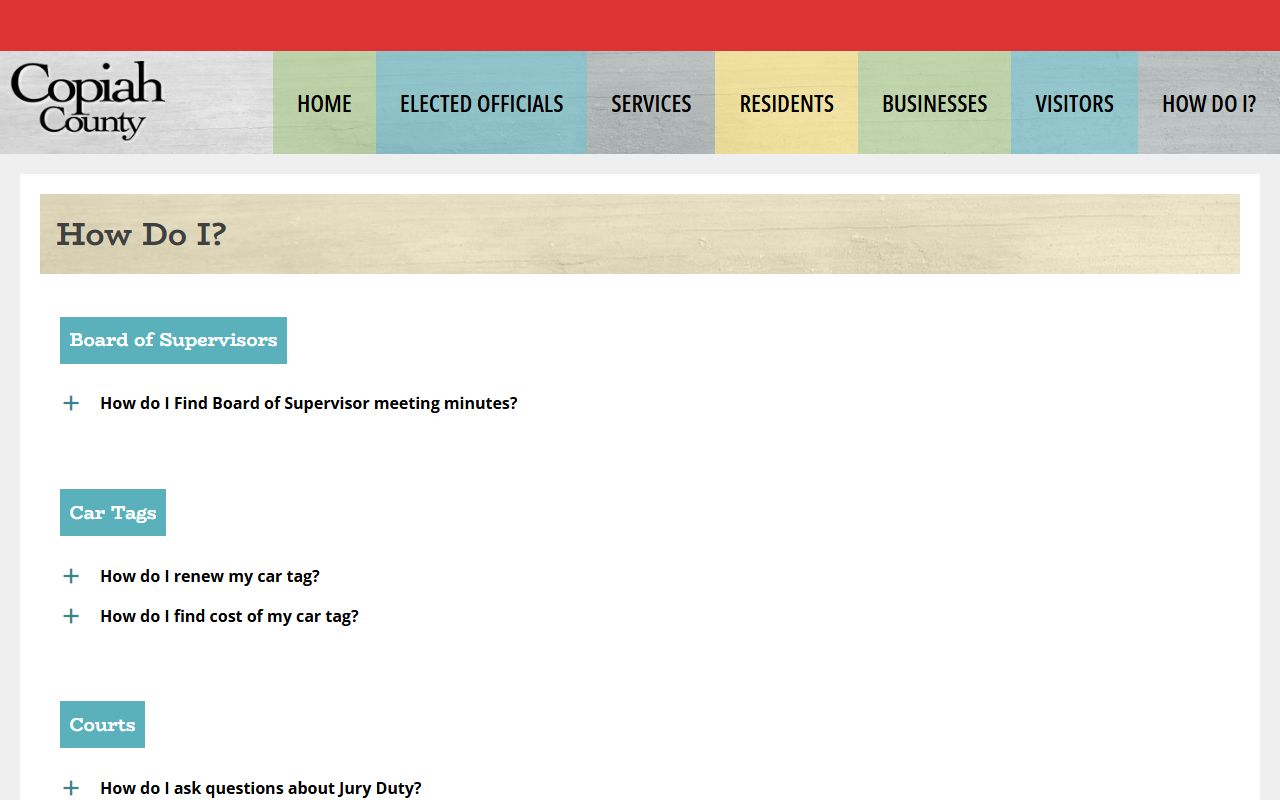
That guidance directs traffic payments to Justice Court and marriage questions to the Circuit Clerk. The table below lists the fees that official sources confirm.
| Item | Amount |
|---|---|
| Marriage license filing fee (Circuit Clerk) | $37 |
| MSDH certified marriage copy | $17 |
| MSDH divorce index five-year search | $17 |
| Justice Court traffic fine | Varies; confirm with the clerk |
| Court copies and certified court copies | Not published; ask the clerk |
| Electronic Courts document view | Registration and per-page fees apply |
An older county FAQ still lists a $21 marriage fee under a former clerk, so confirm the current $37 amount with the Circuit Clerk before you pay.
How to Interpret Copiah County Court Records
Court files use shorthand that can confuse a first-time reader. A charge is not a conviction. A docket entry can mark a motion, an order, a hearing, or a continuance. A disposition shows the outcome, while a status field shows where the case stands today. Reading a file well means matching each entry to the stage it marks.
The terms below appear often in Copiah County court records.
- Affidavit
- A sworn statement used to start many criminal or civil matters in Justice Court.
- Bound over
- Sent from a lower court toward the grand jury after a finding of probable cause.
- Disposition
- The final or current outcome of a case or charge.
- Plea
- A defendant's answer to a charge, such as guilty or not guilty.
- Capias
- A court order to arrest a person, often after a failure to appear.
- Sealed record
- A record kept from general public view by law or court order.
Accuracy and Record Limitations
Online court data can lag behind the paper file. A plea, a payment, or a recall can take time to post. A name search can also miss a file when a name is spelled a new way or a case is sealed. When the detail matters, the clerk's office is the source of record. Call the office that holds the file to confirm a date, a fee, or a disposition.
Note: Confirm any case detail with the Circuit, Chancery, or Justice Court office before you rely on it for a deadline, a filing, or a legal decision.
History of Copiah County Courts
Copiah County was formed in 1823, and its court records reach back that far. The Chancery Clerk offers in-house and online genealogy searches from the county's founding to the present. The courthouse at 100 Caldwell Drive was built in 1902 and 1903 by architect James Riely Gordon. It became a Mississippi Landmark in 1984 and contributes to the Hazlehurst Historic District placed on the National Register in 1998.
Justice Court history is unusually well documented on the county page. It traces the court to the English justice of the peace system and to the Brown v. Vance ruling that pushed Mississippi to create the Justice Court Clerk role, salary its judges, and require training. Those changes took effect on January 1, 1984.
The U.S. Census records the county's land area and population on its Copiah County QuickFacts page.
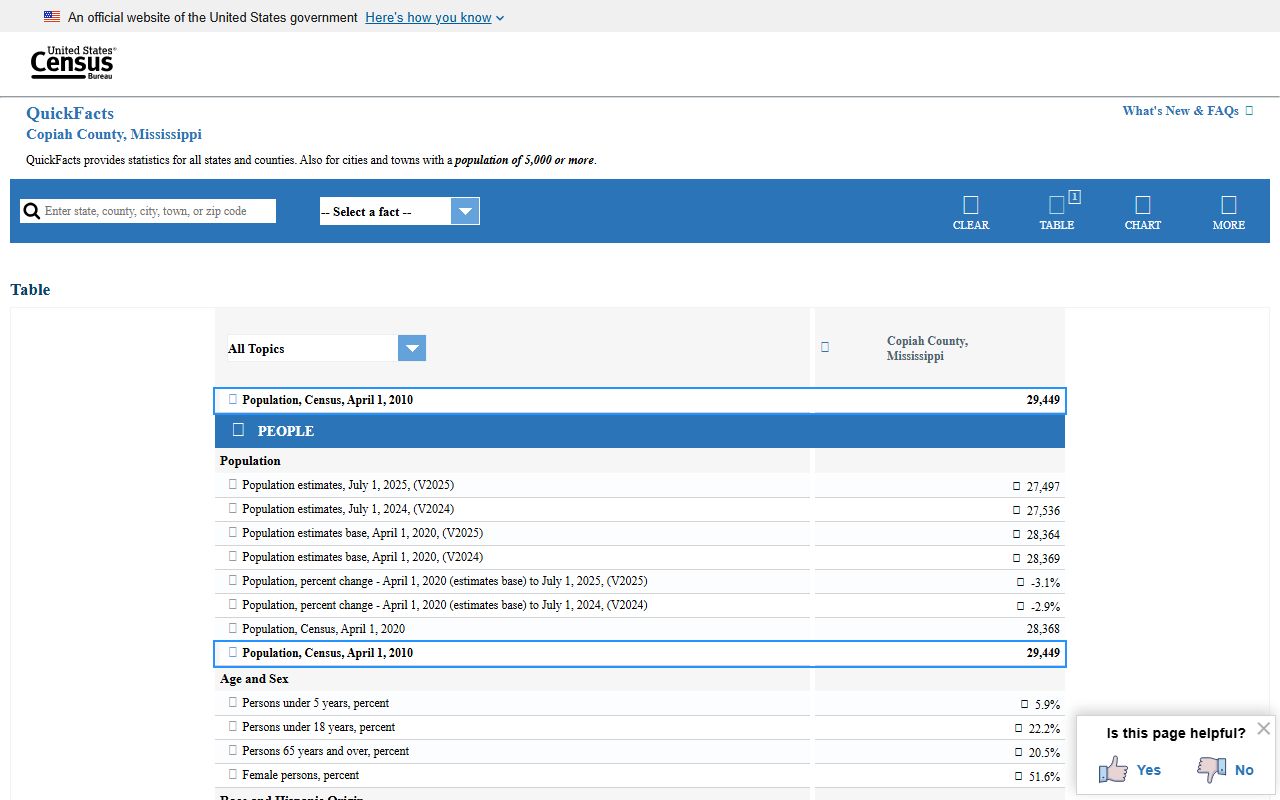
Those figures show a county of about 28,000 people spread across more than 770 square miles, which is why its court offices serve a wide rural area from Hazlehurst.
Frequently Asked Questions
Common questions about Copiah County court records come up again and again. The answers below pull from the county clerks, the courts, and Mississippi law.
The Mississippi Judiciary home page is a good starting point for the statewide systems behind these answers, at the Mississippi Judiciary site.
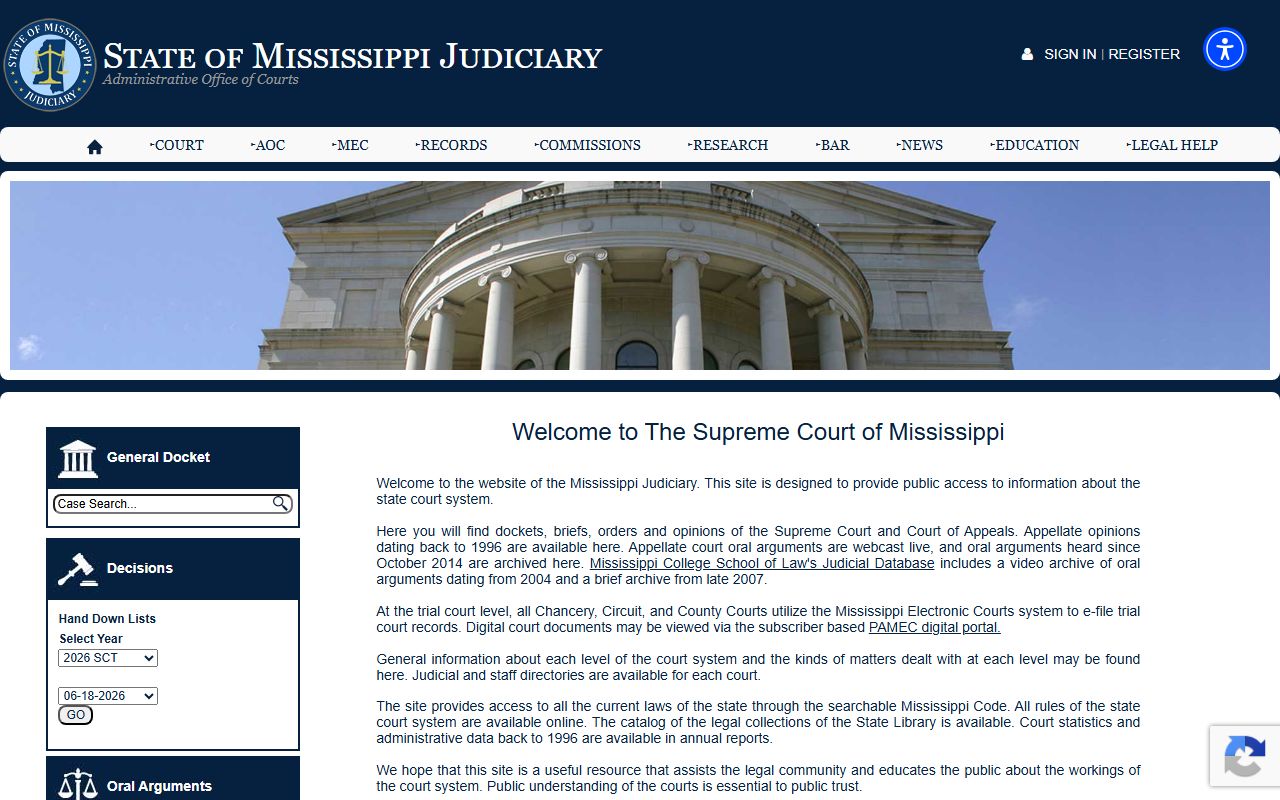
That site hosts the electronic court system and the appellate courts that sit above Copiah County's trial courts.
Are Copiah County court records public?
Yes, most are. Mississippi law treats court and government records as open unless a statute restricts them. Youth Court files, sealed cases, adoptions, and commitments are confidential. Start with the clerk who holds the file, and expect redaction on sensitive details.
Where do I search Copiah County court records online?
Circuit and Chancery cases live in Mississippi Electronic Courts, with public viewing through a PAMEC account. There is no single free county-branded search that covers every court. For records that are not online, contact the clerk who holds the file.
How do I get a certified copy of a court record?
Ask the clerk's office, not the search portal. The Circuit Clerk handles Circuit Court files, and the Chancery Clerk handles divorce, probate, and land files. Give the case number, party names, and the record type, and ask the office for the current copy fee.
Which court handles divorce and probate cases?
Chancery Court hears divorce, custody, estates, wills, and guardianships. The Chancery Clerk on South Lowe Street keeps those files. Marriage licenses are different, since the Circuit Clerk issues them at the courthouse.
Is there an online jail roster or warrant list?
No. The county does not publish an online jail roster, an active warrant list, or a sheriff's app. Call the Sheriff's Office for custody questions and the right court for warrant questions. State systems like MDOC and VINE cover prison and notification needs.
How do I pay a Copiah County traffic ticket?
Contact Justice Court for the correct amount first. The office takes cash, cashier's checks, and money orders, and a credit-card option may be available by phone or online once the clerk confirms it. City tickets go to the municipal police or court that issued them.
Why does the marriage license fee differ between sources?
The current Circuit Clerk page lists a $37 filing fee, while an older FAQ still shows $21 under a former clerk. Treat the FAQ figure as stale, and confirm the current amount with the Circuit Clerk before you apply.